
False lashes can generally be divided into three main types based on how they are applied and worn: strip lashes, cluster lashes, and lash extensions.
Strip Lashes – A complete lash strip applied along the lash line for temporary wear, including traditional glue-on, magnetic, and self-adhesive strip lashes.
Cluster Lashes – Small lash segments applied in sections, offering flexible placement and commonly used for DIY and multi-day wear.
Lash Extensions – Professional lash products applied to natural lashes by trained lash artists, including individual lash extensions, easy fan lashes, premade fans, and pre-shaped lash extensions such as YY, W, and U lashes.
These three categories differ mainly in application method, wear duration, and skill level. Other terms such as magnetic lashes, pre-glued lashes, premade fans, or YY lashes usually describe subtypes or product structures within these main categories rather than separate types at the same level.
This guide breaks down the different types of lashes and their subtypes, helping you understand how each product works, how they differ, and where each type is commonly used.
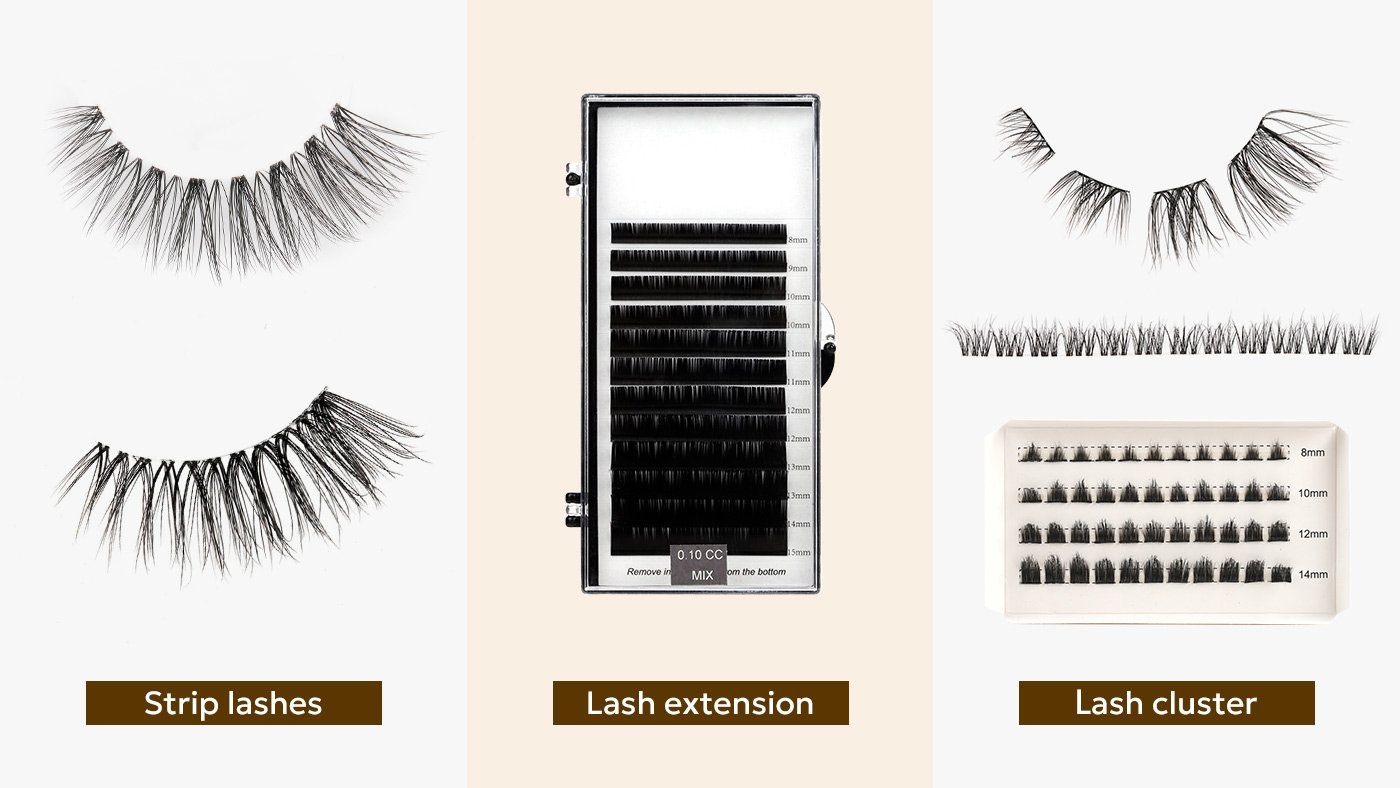
The three main types of false lashes differ primarily in their application method, wear time, customization, and skill requirements.
Lash Type | Application | Typical Wear | Skill Level | Customization | Common Use |
Strip Lashes | Applied as a full strip | Daily / temporary wear | Beginner-friendly | Low–Medium | Makeup, retail and personal use |
Cluster Lashes | Individual clusters combined to create a lash set | Multi-day wear | Beginner–Intermediate | High | DIY lashes and at-home application |
Lash Extensions | Applied lash by lash | Several weeks with proper maintenance | Professional | Very High | Lash salons and professional services |
Strip lashes offer the simplest and fastest application, while cluster lashes provide greater control over placement and longer wear. Lash extensions require professional application but offer the highest level of customization in length, thickness, curl, density, and lash styling.
Strip lashes are false eyelashes in which the lash fibers are attached to a complete band and applied along the lash line as one piece. They are designed primarily for temporary wear and are widely used for everyday makeup, special occasions, and retail beauty products.
Compared with cluster lashes and professional lash extensions, strip lashes offer the quickest application and removal. They are available in a wide range of lengths, densities, band structures, and styles, from natural and wispy to cat-eye and dramatic designs.
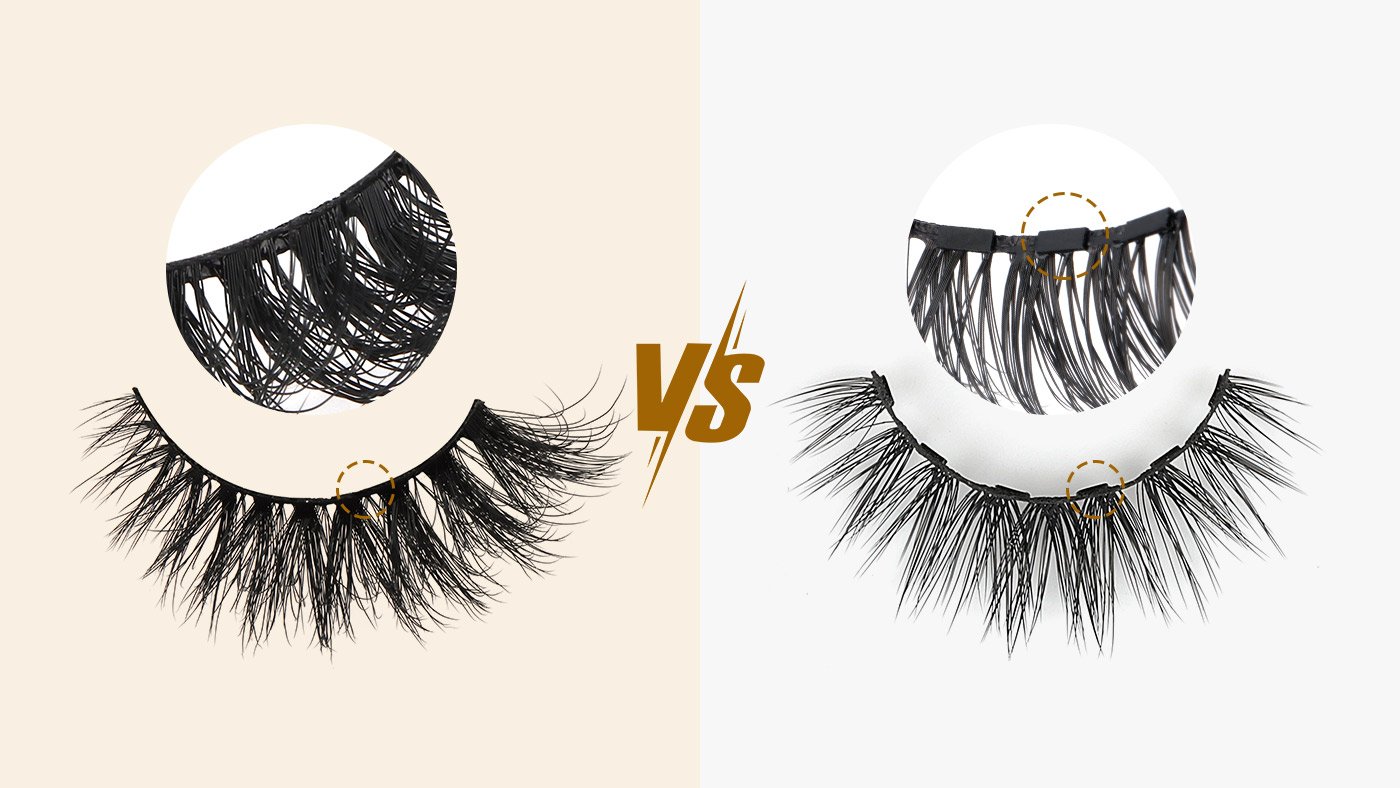
Strip lashes can be further classified by how they attach to the lash line:
Traditional Glue-On Strip Lashes – Applied with separate lash adhesive. This is the most common format and offers the widest range of lash styles, fibers, and band designs.
Magnetic Strip Lashes – Use a magnetic attachment system instead of conventional lash glue. Depending on the product design, they may work with magnetic eyeliner or paired magnetic lash structures.
Self-Adhesive / Pre-Glued Strip Lashes – Feature a pre-applied adhesive strip, allowing the lashes to be pressed directly into place without applying separate lash glue.
Strip lashes are generally best suited to users who want fast application, easy removal, and the flexibility to change lash styles frequently. Their consumer-friendly format also makes them a major product category for beauty retailers, e-commerce brands, and false lash product lines.
For a more detailed breakdown of strip lash structures and variations, see our Types of Strip Lashes guide.
Cluster lashes are small groups of lash fibers joined together at the base and applied in sections rather than as a full strip. Multiple clusters can be combined across the lash line, allowing users to control the length, density, and placement of the finished lash look.
Compared with strip lashes, cluster lashes provide greater styling flexibility and are commonly designed for DIY application and multi-day wear. Users can combine different cluster lengths and styles to create natural, wispy, cat-eye, or fuller lash effects without professional lash extension application.

Cluster lashes are available in several product formats:
Individual Lash Clusters – Separate lash segments that can be placed individually and combined freely to create a customized lash map.
Pre-Mapped Cluster Lashes – Clusters arranged in a predetermined sequence of lengths and styles, making it easier to recreate a complete lash design.
Self-Adhesive / Pre-Glued Cluster Lashes – Feature pre-applied adhesive strip, allowing clusters to be applied without using separate lash bond.
Cluster lashes are particularly suited to users who want more customization than strip lashes while maintaining the convenience of at-home application. This combination of flexible styling and longer wear has made them an important category in the DIY lash market.
Lash extensions are professional eyelash products applied to individual natural lashes using lash extension adhesive. Unlike strip and cluster lashes, they are primarily designed for salon application by trained lash artists and can provide several weeks of wear with proper application and maintenance.
Lash extensions offer the highest level of styling control. Lash artists can select and combine different lengths, thicknesses, curls, densities, and fiber structures to create anything from natural Classic sets to textured, Hybrid, and high-volume designs.
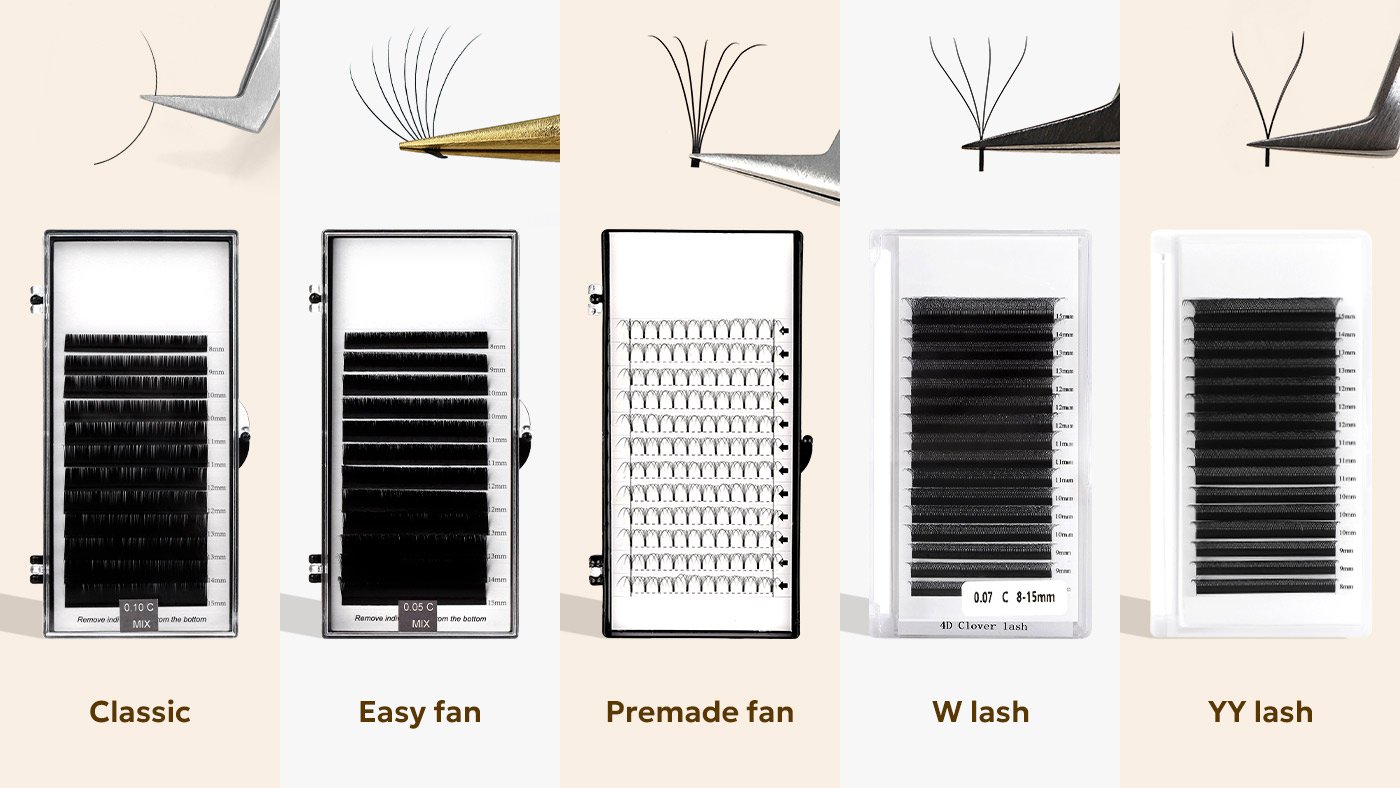
Professional lash extensions can be divided into several major product types based on their structure and how they are used during application:
Individual Lash Extensions – Single extension fibers applied individually to natural lashes. This category includes traditional round-fiber extensions as well as flat lash extensions.
Easy Fan Lashes – Specially designed extension fibers that help lash artists create volume fans more quickly during application, reducing the amount of manual fan-making required.
Premade Fan Lashes – Multiple extension fibers formed into ready-to-use fans during manufacturing. They are available in different fan densities, stem lengths, base structures, curls, and dimensions, allowing lash artists to create Volume sets more efficiently.
Pre-Shaped Lash Extensions – Extensions manufactured into distinctive pre-formed structures, including YY lashes, W lashes, U lashes, and other multi-tip designs. These structures provide different levels of density, texture, and visual effect without requiring lash artists to manually create the same fiber arrangement.
Because of their wide range of specifications and structures, lash extensions are primarily used by lash salons, professional lash artists, training academies, and professional beauty businesses that require precise and customizable lash services.
For a more detailed breakdown of professional extension products, see our Different Types of Lash Extensions guide.
When discussing different types of lashes, lash type, lash style, and lash material describe different characteristics of a product.
Lash Type describes the product format and application method, such as strip lashes, cluster lashes, and lash extensions.
Lash Style describes the finished visual effect, such as natural, wispy, cat-eye, doll-eye, or dramatic lashes.
Lash Material refers to the fiber used to manufacture the lash product.
In simple terms, type explains how the lashes are structured and applied, style explains how they look, and material explains what they are made from.
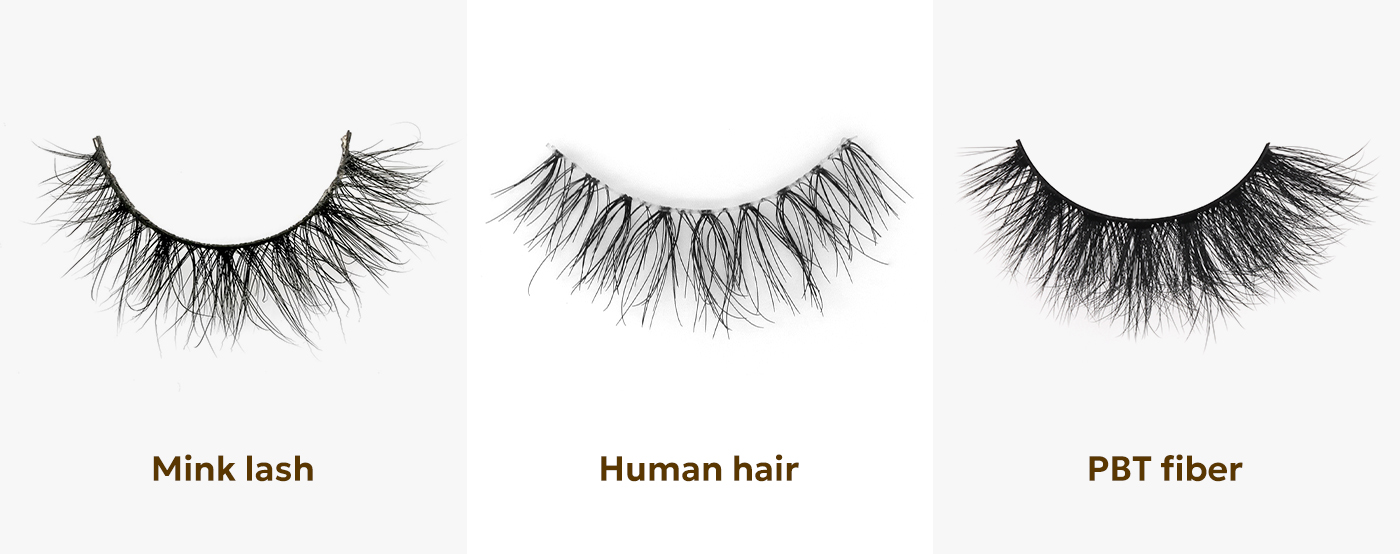
Yes. False lashes can also be classified by the fiber material used to make them, although this is a different classification from strip lashes, cluster lashes, and lash extensions.
Common lash materials include:
PBT Fiber – The most widely used synthetic material in modern false lashes and professional lash extensions. PBT can be manufactured in different thicknesses, curls, finishes, and textures for a wide variety of lash products.
Mink Fur – A natural animal-hair material traditionally used primarily for strip lashes, valued for its fine and lightweight appearance.
Human Hair – Another natural material historically used in some strip lashes, although it is less common in modern lash manufacturing.
Today, PBT fiber is used across strip lashes, cluster lashes, and professional lash extensions, so material does not determine the lash type itself. Two products can be made from the same PBT fiber while having completely different structures, application methods, and uses.
For a detailed comparison of synthetic and natural lash fibers, see our guide to What Are Fake Lashes Made Of?
Choosing between strip lashes, cluster lashes, and lash extensions mainly depends on how the lashes will be applied, how long they need to be worn, and how much styling flexibility is required.
Choose Strip Lashes for Quick, Temporary Wear
Strip lashes are suitable for users who want fast application and easy removal. They are widely used for daily makeup, special occasions, and frequently changing lash styles.
Choose Cluster Lashes for Flexible DIY Styling
Cluster lashes are a good option for users who want to build their own lash map by combining different lengths and densities. They provide more placement flexibility than a full strip and are commonly designed for multi-day, at-home wear.
Choose Lash Extensions for Professional, Long-Term Styling
Lash extensions are designed for professional application and offer the greatest control over curl, length, thickness, density, and overall lash design. They are the preferred option for salons and clients seeking customized, longer-lasting lash services.
There is no single lash type that is best for every situation. Strip lashes prioritize convenience, cluster lashes balance DIY flexibility with longer wear, and lash extensions provide the highest level of professional customization.
For lash brands and wholesale buyers, understanding the different types of lashes is also important when planning a product range. Strip lashes, cluster lashes, and lash extensions serve different customer groups, application scenarios, and sales channels, so they can play different roles within a lash product line.
Strip Lashes – Retail & Beauty Consumers
Strip lashes are well suited to retail and e-commerce channels because they are easy for consumers to understand, purchase, and use. Brands can build collections around different styles, band types, fibers, and application systems, including traditional glue-on, magnetic, and self-adhesive lashes.
Cluster Lashes – DIY Lash Market
Cluster lashes are primarily designed for consumers who want more control over their lash look and longer wear than conventional strip lashes. Product lines can include different cluster lengths, lash maps, styles, and adhesive systems to support a variety of DIY lash kits and at-home application needs.
Lash Extensions – Professional Lash Market
Lash extensions are targeted primarily at lash artists, salons, distributors, and professional beauty businesses. A professional extension range can cover individual lash extensions, easy fan lashes, premade fans, and pre-shaped lash extensions, with multiple options in curl, length, thickness, density, and fiber structure.
For brands serving multiple customer groups, these categories can also complement one another. Strip and cluster lashes address consumer and DIY markets, while lash extensions support professional salon channels, allowing brands and distributors to build product ranges around different application needs and customer segments.
What are the main types of false lashes?
The three main types of false lashes are strip lashes, cluster lashes, and lash extensions. Strip lashes are applied as a complete band, cluster lashes are applied in small sections, and lash extensions are professionally applied to individual natural lashes.
What is the difference between strip lashes and cluster lashes?
Strip lashes use a complete lash band that is applied along the lash line as one piece. Cluster lashes consist of smaller lash segments that are placed individually, giving users more control over length, density, and lash mapping.
What are the different types of strip lashes?
Common types include traditional glue-on strip lashes, magnetic strip lashes, and self-adhesive or pre-glued strip lashes. Strip lashes can also vary by band structure, fiber, length, density, and style.
What are the different types of lash extensions?
Professional lash extension products include individual lash extensions, easy fan lashes, premade fans, and pre-shaped lash extensions such as YY, W, U, and Y lashes. They are available in different curls, lengths, thicknesses, and densities for customized lash sets.
Are cluster lashes the same as lash extensions?
No. Cluster lashes are small lash segments commonly designed for DIY or at-home application, while professional lash extensions are applied to individual natural lashes by trained lash artists. They also differ in application technique, adhesive system, and typical wear time.
Which type of lashes looks the most natural?
Any of the three main lash types can create a natural look when the appropriate length, density, fiber, and style are selected. Strip lashes offer quick natural enhancement, cluster lashes allow flexible placement, and lash extensions provide the greatest control over a customized natural-looking result.
Understanding the different types of lashes becomes much easier when they are classified by how they are structured and applied. Strip lashes are applied as a complete band, cluster lashes are placed in smaller sections, and lash extensions are professionally applied to individual natural lashes.
Each category also includes its own variations, from magnetic and self-adhesive strip lashes to pre-mapped clusters, premade fans, and pre-shaped lash extensions. Lash styles and materials add further variation, but they describe different characteristics rather than separate main lash types.
For lash brands, wholesalers, and professional beauty businesses, understanding these distinctions can help build clearer product categories and select the right lash products for different customers and markets.
As a professional eyelash manufacturer, Mega Beauty provides strip lashes, cluster lashes, lash extensions, and customized OEM/private label solutions for global lash businesses.
No.18 B, Laoshan Road, Laoshan District, Qingdao City,Shandong Province
Copyright © 2025 Qingdao Mega Beauty Lashes Co., Ltd. All Rights Reserved.
