
Strip lashes come in many different forms, but the main types can be classified by lash format, attachment method, material, and style or effect.
By lash format: Full strip lashes, half lashes, and bottom strip lashes
By attachment method: Glue-on, magnetic, and self-adhesive strip lashes
By material: PBT synthetic fiber, mink hair, human hair, and specialty or sustainable materials
By style and effect: Natural, wispy, fluffy, volume, dramatic, cat-eye, doll-eye, and anime lashes
The most common type is the full strip lash, which covers most or all of the upper lash line. Half lashes focus more on the outer portion of the eye, while different attachment methods and lash styles allow strip lashes to create anything from subtle, natural definition to bold and dramatic effects.
The key is that lash format, material, attachment method, and style describe different aspects of a strip lash. For example, a pair of lashes can be full-strip, glue-on, PBT, and wispy at the same time.
Strip lashes are false eyelashes made with multiple lash fibers attached to a flexible band and applied as a single piece along the natural lash line. Unlike individual lash extensions, which are attached to natural lashes one by one, strip lashes are designed to be applied and removed as a complete lash strip.
A strip lash typically consists of two main parts:
Lash fibers: Create the length, density, texture, and overall lash style.
Lash band: Holds the fibers together and provides the base that sits along the eyelid.
Strip lashes are available in different formats, attachment methods, materials, densities, and styles. Some cover the full upper lash line, while others are designed for the outer corner or lower lash line. They can also use traditional lash glue, magnetic systems, or pre-applied adhesive.
Because these characteristics can be combined, there is no single way to classify strip lashes. The sections below break down the main types and explain how each category differs.
Strip lashes can first be classified by their overall format and how much of the lash line they are designed to cover. The main formats include full strip lashes, half lashes, and bottom strip lashes.
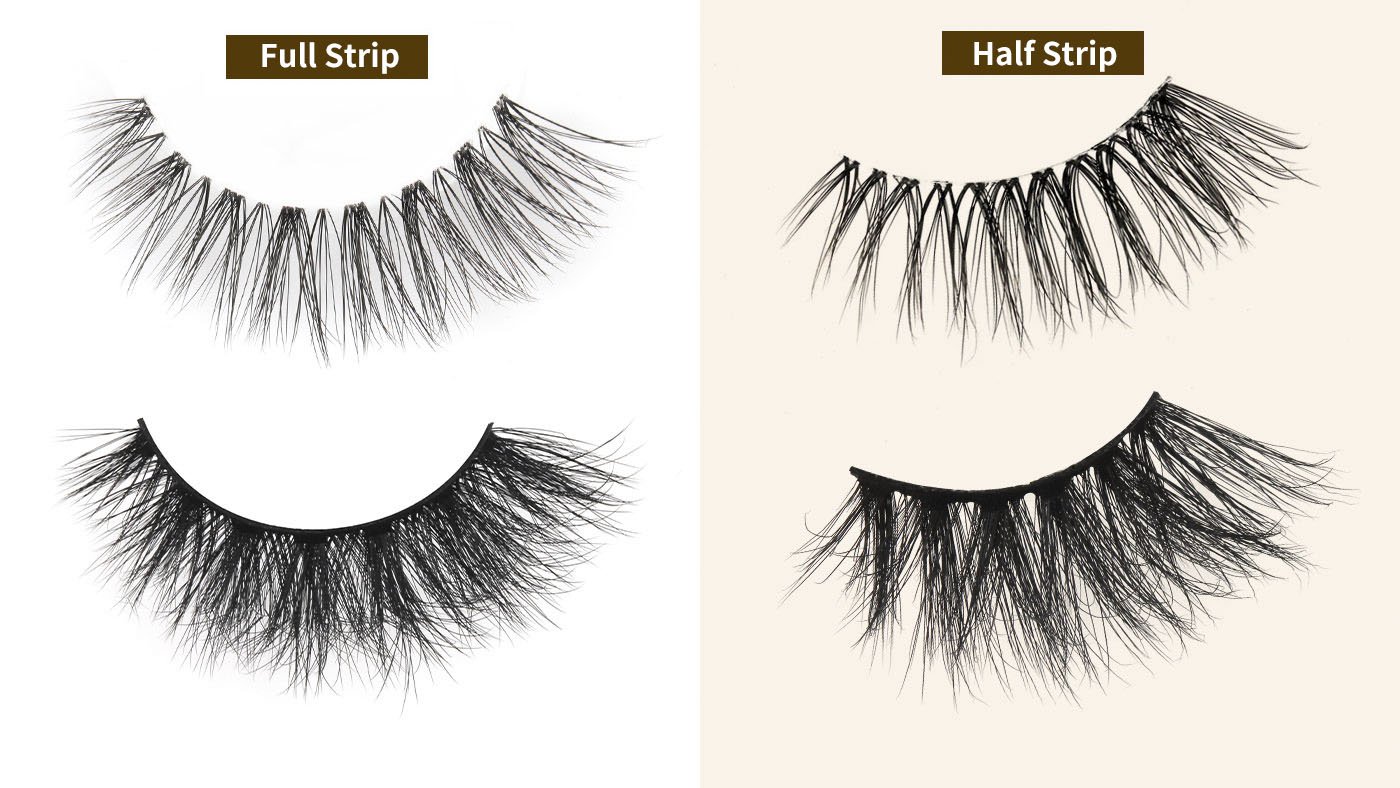
Full strip lashes are designed to extend across most or all of the upper lash line, creating a complete lash look in a single strip.
They are the most common and versatile strip lash format and are available in a wide range of lengths, densities, materials, and styles—from lightweight natural lashes to wispy, fluffy, and dramatic designs.
Because the entire lash look is built into one continuous strip, full strip lashes can be designed to create different eye effects through changes in fiber length, layering, density, and lash direction.
Half lashes, also called corner lashes or partial strip lashes, use a shorter lash band and are typically applied toward the outer portion of the upper lash line.
Instead of adding fibers across the entire eye, they concentrate length and density around the outer corner. This makes them particularly suitable for creating elongated, lifted, cat-eye, and fox-eye effects.
Half lashes can also blend more subtly with the wearer's natural lashes because the inner portion of the lash line remains uncovered.
Bottom strip lashes are designed specifically for the lower lash line. They typically use shorter, finer fibers and a lighter overall structure than upper strip lashes.
Depending on the design, bottom lashes can create subtle lower-lash definition or more noticeable separated and spiked effects, including styles inspired by anime and editorial makeup.
The main difference between these formats is coverage: full strip lashes cover most or all of the upper lash line, half lashes focus on a shorter section of the upper lash line, and bottom strip lashes are designed for the lower lash line.
Strip lashes can also be classified by how they attach to the lash line. The three main types are glue-on, magnetic, and self-adhesive strip lashes.
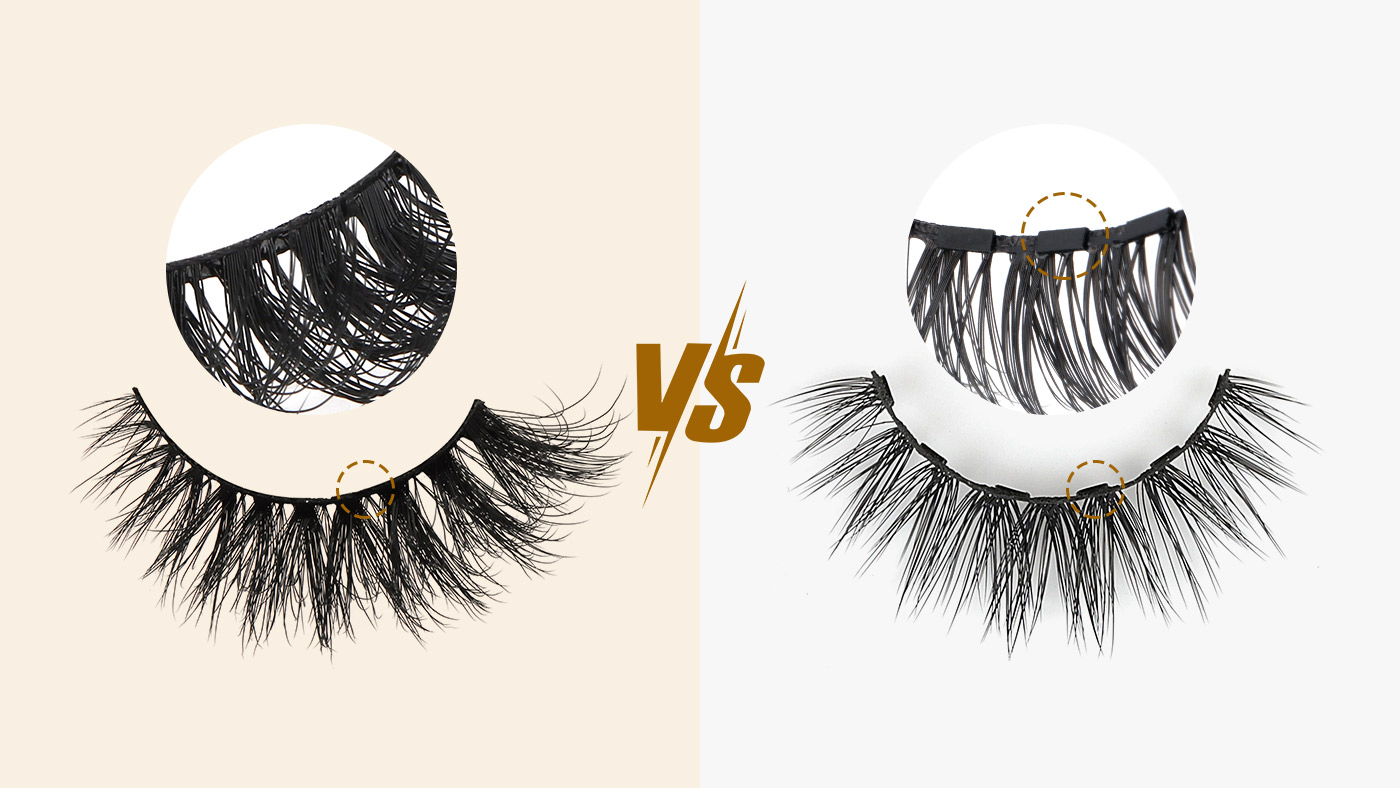
Glue-on strip lashes are traditional false eyelashes applied with a separate lash adhesive. A thin layer of glue is applied along the lash band before the strip is positioned above the natural lash line.
This is the most established attachment method and is available across almost every lash format and style, from lightweight natural lashes to dense, dramatic designs.
Because the adhesive is separate from the lash itself, users can choose different lash glues based on drying time, hold, color, and formula preferences.
Magnetic strip lashes use small magnetic components instead of traditional lash glue. Depending on the system, they may attach to magnetic eyeliner or use upper and lower magnetic lash strips that connect around the natural lashes.
Their main distinction is the glue-free attachment system, making them a reusable alternative to conventional glue-on strip lashes.
However, the magnets and band construction can affect the overall flexibility, weight, and design of the lash, so magnetic lashes have different structural requirements from standard strip lashes.
Self-adhesive strip lashes come with adhesive already integrated or pre-applied to the lash band, allowing them to be worn without applying separate lash glue.
They may also be marketed as pre-glued, press-on, or pop-on lashes, although exact product construction and terminology can vary between brands.
Their main advantage is convenience: users can remove the lash from the tray and apply it directly, making this format particularly suitable for quick application, beginners, travel, and everyday wear.
| Attachment Type | How It Attaches | Main Characteristic |
|---|---|---|
| Glue-On | Separate lash adhesive | Versatile and widely available |
| Magnetic | Magnetic eyeliner or magnetic lash system | Glue-free and reusable |
| Self-Adhesive | Pre-applied/integrated adhesive | Fast, convenient application |
The attachment method mainly changes how the strip lash is applied, not the lash style itself. A natural, wispy, cat-eye, or dramatic strip lash can potentially be designed with different attachment systems depending on its construction.
The material used to make strip lashes affects their softness, appearance, curl stability, consistency, and overall performance. Modern strip lashes can be made from synthetic fibers, natural hair, or specialty materials developed for different product requirements.
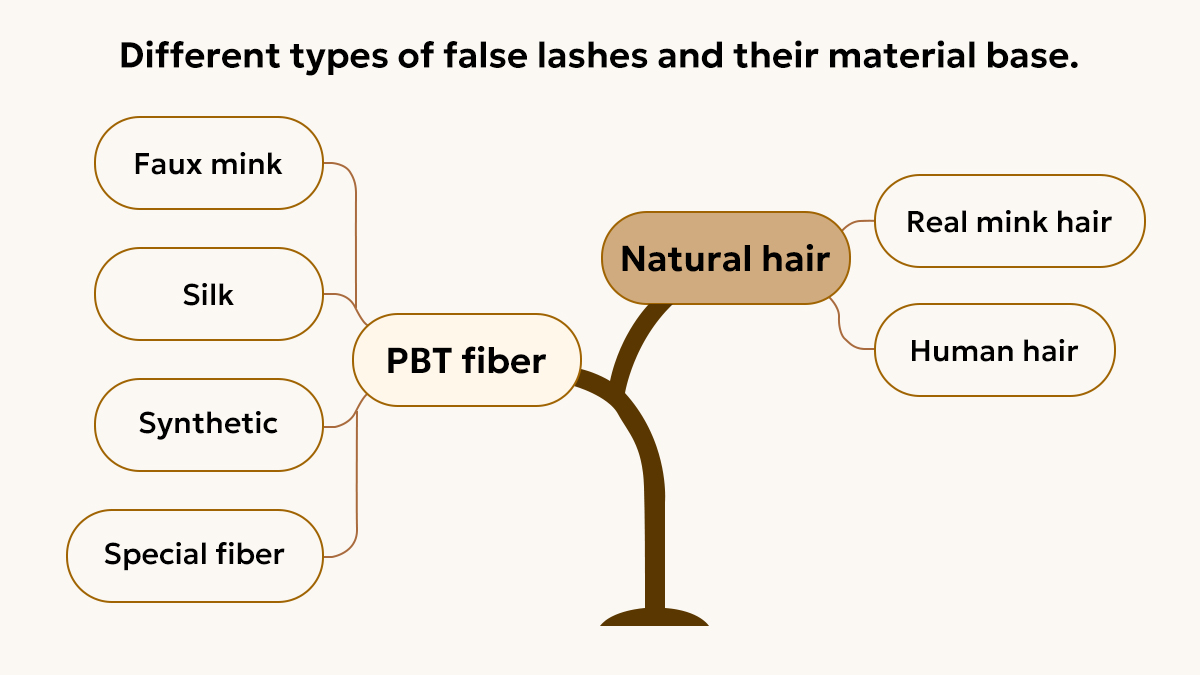
PBT (polybutylene terephthalate) is one of the most widely used synthetic fibers for modern false eyelashes. It can be processed into different thicknesses, tapers, curls, finishes, and textures, making it suitable for a wide range of strip lash designs.
PBT strip lashes generally offer:
Consistent fiber shape and quality
Stable curl retention
Flexible control over thickness and taper
Different matte, glossy, soft, or textured finishes
Good consistency for large-scale production
Many lashes marketed as faux mink, silk, or cashmere lashes are made from synthetic fibers such as PBT. These names often describe the intended look, softness, finish, or product positioning rather than identifying a completely different base material.
Mink lashes are made from natural mink hair rather than synthetic lash fibers. They are traditionally known for their fine, soft appearance and naturally irregular texture.
Because natural hair varies more than manufactured synthetic fibers, mink lashes may show greater variation in fiber shape, curl, and consistency. They also raise animal-origin and ethical considerations that are relevant in some markets.
Mink should therefore be distinguished from faux mink lashes, which imitate a soft mink-like appearance using synthetic fibers.
Human hair strip lashes use processed natural hair fibers and are generally associated with a fine, lightweight, and natural-looking finish.
Compared with engineered synthetic fibers, however, natural hair provides less control over properties such as curl consistency, fiber uniformity, and long-term shape retention.
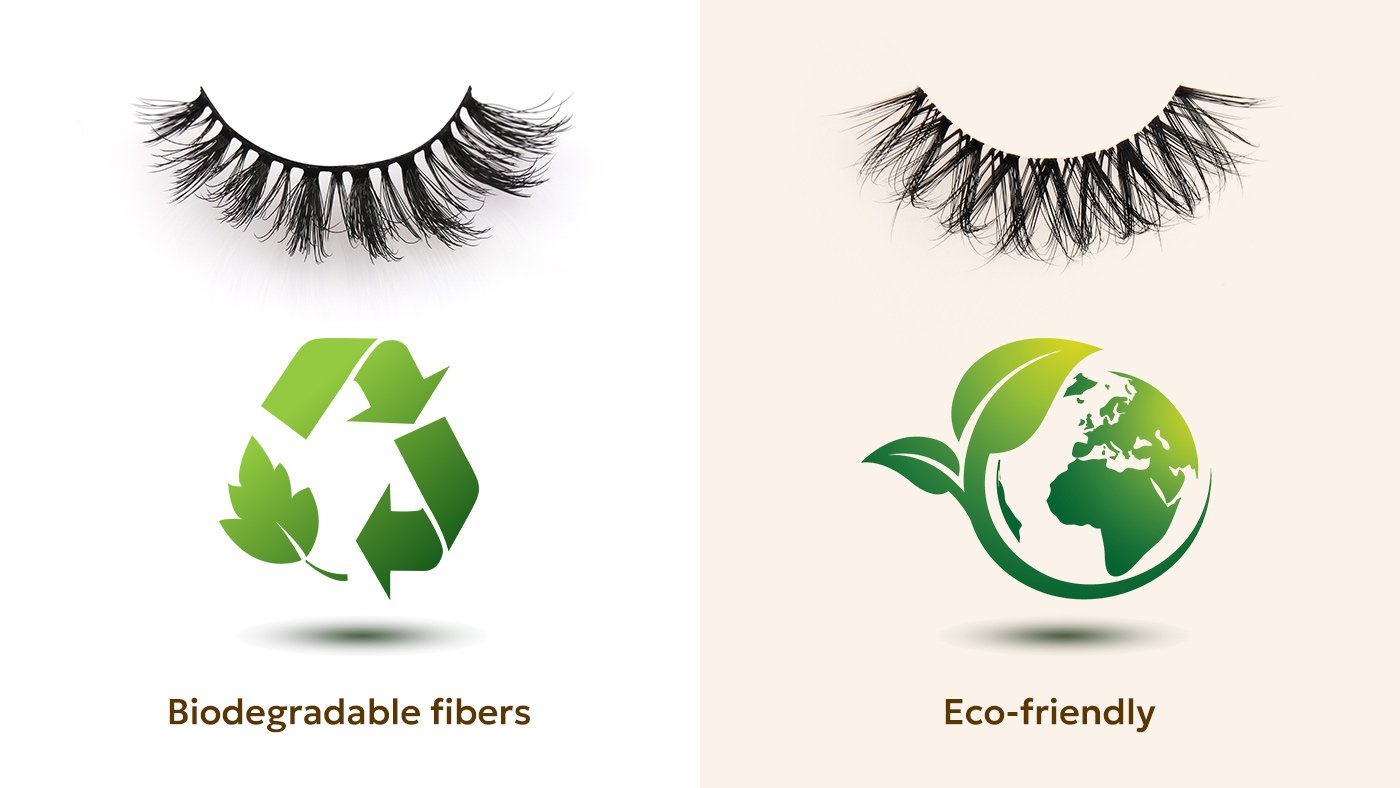
Some strip lashes use alternative or specially developed fibers to address sustainability or specific product-positioning requirements.
These may include biodegradable or partially bio-based fiber options, depending on the material technology used. Claims such as “biodegradable” or “eco-friendly” should be evaluated according to the actual fiber composition, production method, and supporting material documentation, rather than the marketing term alone.
For a more detailed explanation of PBT, mink, faux mink, silk-style fibers, and other lash materials, see our guide to [What Are Fake Lashes Made Of?].
Material and style are not the same thing. A PBT strip lash, for example, can be designed as natural, wispy, cat-eye, fluffy, or dramatic depending on its fiber arrangement and overall lash design.
Beyond format, attachment method, and material, strip lashes can also be classified by their visual density, texture, and overall styling effect.
Unlike lash format, which describes the physical form of the product, lash style describes how the fibers are arranged and how the finished lashes look on the eye.
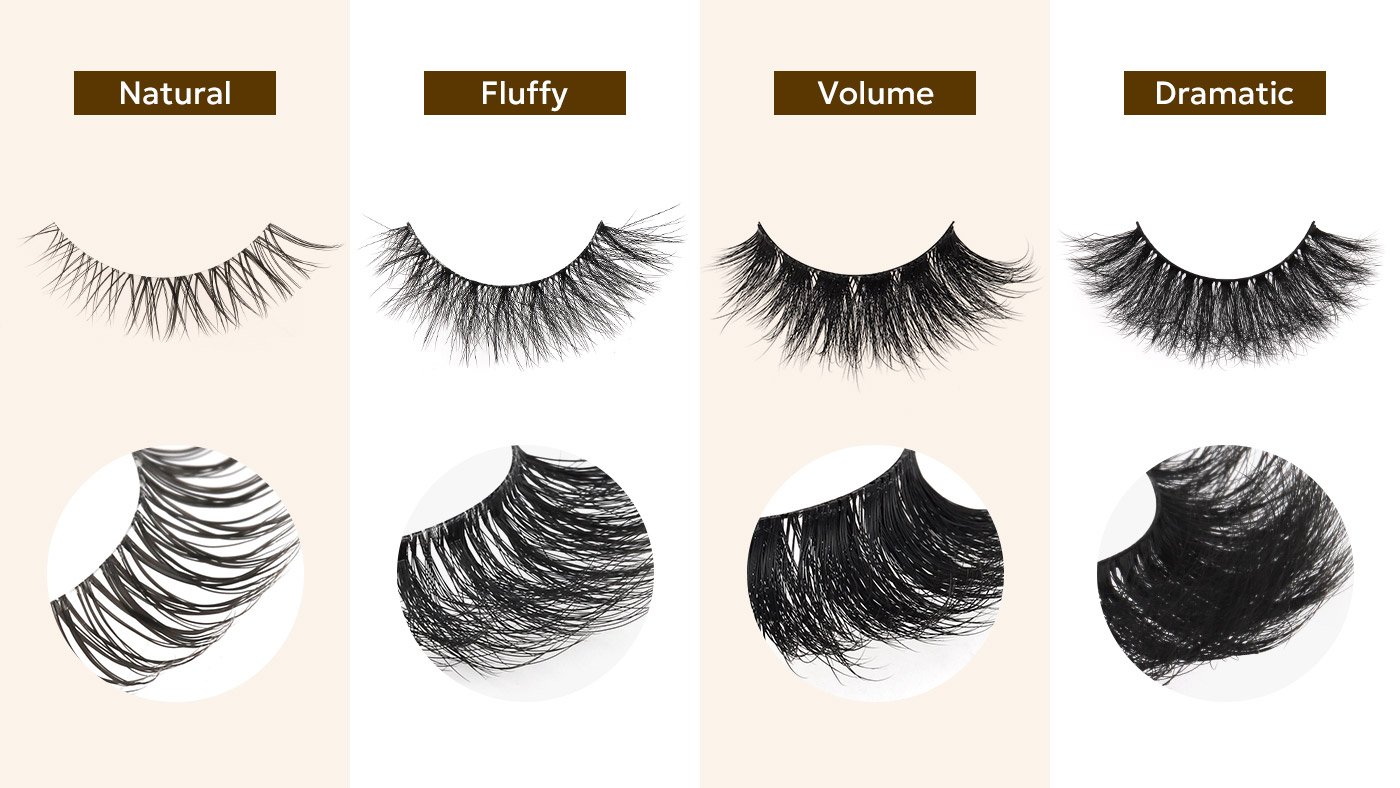
Natural strip lashes use lighter density, finer fibers, and softer layering to enhance the lash line without creating an overly heavy effect.
They are commonly designed to blend closely with natural eyelashes, making them suitable for subtle makeup, everyday wear, and customers who prefer understated lash enhancement.
Fluffy strip lashes use layered fibers and varied lash placement to create a softer, fuller appearance with visible dimension.
Rather than forming a dense, uniform lash line, the fibers are arranged to produce a more airy and textured finish.
Volume strip lashes use greater fiber density and layering to create a noticeably fuller lash line.
Different lengths and fiber arrangements can be combined to increase depth while maintaining the intended lash shape.
Dramatic strip lashes emphasize stronger length, density, layering, or contrast for a more noticeable finished look.
Depending on the design, they may feature extra-long fibers, dense lash lines, pronounced spikes, or more exaggerated shapes.
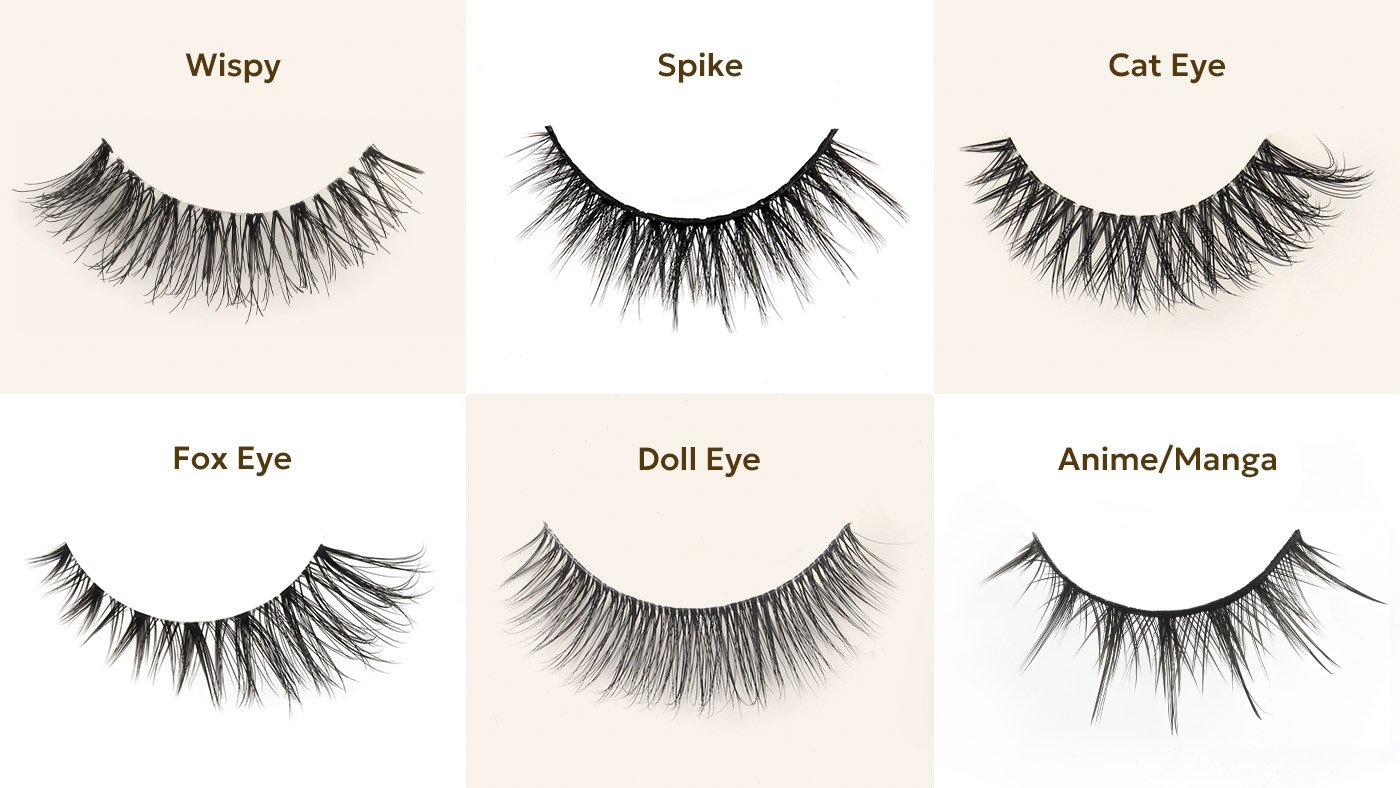
Wispy strip lashes combine alternating lash lengths and separated peaks to create a textured, feathered effect.
The contrast between shorter base fibers and longer sections gives the lash line more visible movement and dimension.
Spike lashes feature clearly defined groups of longer fibers that form pointed peaks along the lash line.
The spacing, length, and thickness of the spikes can be adjusted to create anything from subtle texture to a highly defined editorial effect.
Cat-eye lashes gradually increase in length toward the outer corner, creating an elongated appearance that visually draws the eye outward.
Fox-eye lashes also emphasize the outer corner but typically use a more pronounced, lifted, and elongated lash pattern.
The exact distinction between cat-eye and fox-eye designs can vary between brands, so the actual lash map is more useful than the style name alone.
Doll-eye lashes place greater length around the center of the lash line, with shorter fibers toward the inner and outer corners.
This creates a rounder, more open-looking eye effect compared with outer-corner-focused styles.
Anime and manga strip lashes use high-contrast lengths and clearly separated spikes to create a more graphic lash pattern.
They often combine prominent longer spikes with shorter supporting fibers, producing the distinctive separated lash effect associated with anime-inspired makeup.
Density and style can overlap. For example, a strip lash can be both wispy and natural, wispy and dramatic, or cat-eye and fluffy. Terms such as natural, volume, wispy, and cat-eye describe different aspects of the finished lash design rather than mutually exclusive product categories.
Choosing the right strip lashes depends on where you want to add coverage, how you prefer to apply them, and the finished lash effect you want to create.
Start with how much of the lash line you want to enhance.
Full strip lashes are the most versatile option for creating a complete lash look across the upper lash line.
Half lashes are better for adding length and lift toward the outer corner while leaving more of the natural lash line visible.
Bottom strip lashes are designed specifically to add definition or stylized texture to the lower lash line.
Next, consider how the lashes will be applied.
Glue-on lashes offer the widest selection of lash styles and designs.
Magnetic lashes provide a glue-free alternative using a magnetic attachment system.
Self-adhesive lashes are designed for quick application without separate lash glue.
The best option depends on whether the priority is styling flexibility, reusable convenience, or faster application.
Material influences the fiber's feel, appearance, consistency, and curl performance.
Synthetic fibers such as PBT offer extensive control over curl, taper, thickness, and finish, while natural-hair lashes have different texture and consistency characteristics.
Rather than choosing by material name alone, consider how the actual fiber performs in the finished lash design.
Finally, decide what you want the lashes to look like.
Natural → subtle definition and lighter density
Wispy → separated lengths and visible texture
Fluffy → soft layering and fuller dimension
Volume → greater overall density
Cat-eye / Fox-eye → more emphasis toward the outer corner
Doll-eye → greater emphasis around the center
Anime / Manga → pronounced spikes and high-contrast texture
Dramatic → stronger length, density, or visual impact
There is no single “best” type of strip lash. A lash can combine several characteristics at once—for example, a full-strip, glue-on, PBT wispy lash or a half-strip, self-adhesive cat-eye lash.
The right choice comes from selecting the combination of format + attachment + material + style that matches the intended application and finished look.
For lash brands and wholesale buyers, choosing strip lashes involves more than selecting a popular style. A well-planned collection should balance core products, different application formats, visual styles, and target-market preferences.
Start with versatile products that can support multiple styles and price points. PBT strip lashes are widely used because the fiber can be manufactured with different curls, thicknesses, tapers, finishes, and textures.
From this foundation, brands can develop collections across:
Full and half lash formats
Natural, wispy, fluffy, and dramatic styles
Cat-eye, doll-eye, and other lash shapes
Different fiber lengths, densities, and layering effects
Add Different Application Options
Attachment method can also be used to expand a strip lash collection.
Traditional glue-on lashes provide broad styling flexibility, while self-adhesive and magnetic lashes offer alternative application experiences for different consumer needs.
Brands do not necessarily need every format. Product selection should reflect the target customer, sales channel, price positioning, and intended use.
Product names alone do not guarantee the same result across different suppliers. When comparing strip lash samples, buyers should evaluate:
Fiber softness and consistency
Curl and shape consistency
Lash band flexibility and comfort
Fiber arrangement and symmetry
Style consistency between pairs
Adhesive or magnetic performance where applicable
Batch-to-batch consistency
Physical samples are especially important when developing private-label products because two lashes described with the same style name can still differ significantly in structure and finished appearance.
Once the core product direction is established, the collection can be expanded through different lash formats, fiber designs, styles, colors, packaging, and application systems.
As a professional strip lash manufacturer, Mega Beauty supplies a wide range of strip lashes for wholesale and private-label brands, with support for product selection, custom lash development, packaging, and OEM/ODM production.
Explore our [Strip Lashes Wholesale] collection or contact Mega Beauty to discuss samples and product development for your lash range.
There is no single way to define the different types of strip lashes. A strip lash can combine several characteristics at the same time, including its lash format, attachment system, material, density, and styling effect.
Full and half lashes describe how the lash is structured across the eye, while glue-on, magnetic, and pre-applied adhesive systems describe how the strip is attached. Materials influence fiber performance, while styles such as wispy, cat-eye, doll-eye, and dramatic determine the finished visual effect.
Understanding these differences makes it easier to compare strip lashes based on how they are actually designed rather than relying only on product names.
For lash brands and wholesale buyers, Mega Beauty offers strip lashes wholesale across different formats, materials, band constructions, and styles, with private-label and custom product development available for different market needs.
No.18 B, Laoshan Road, Laoshan District, Qingdao City,Shandong Province
Copyright © 2025 Qingdao Mega Beauty Lashes Co., Ltd. All Rights Reserved.
