
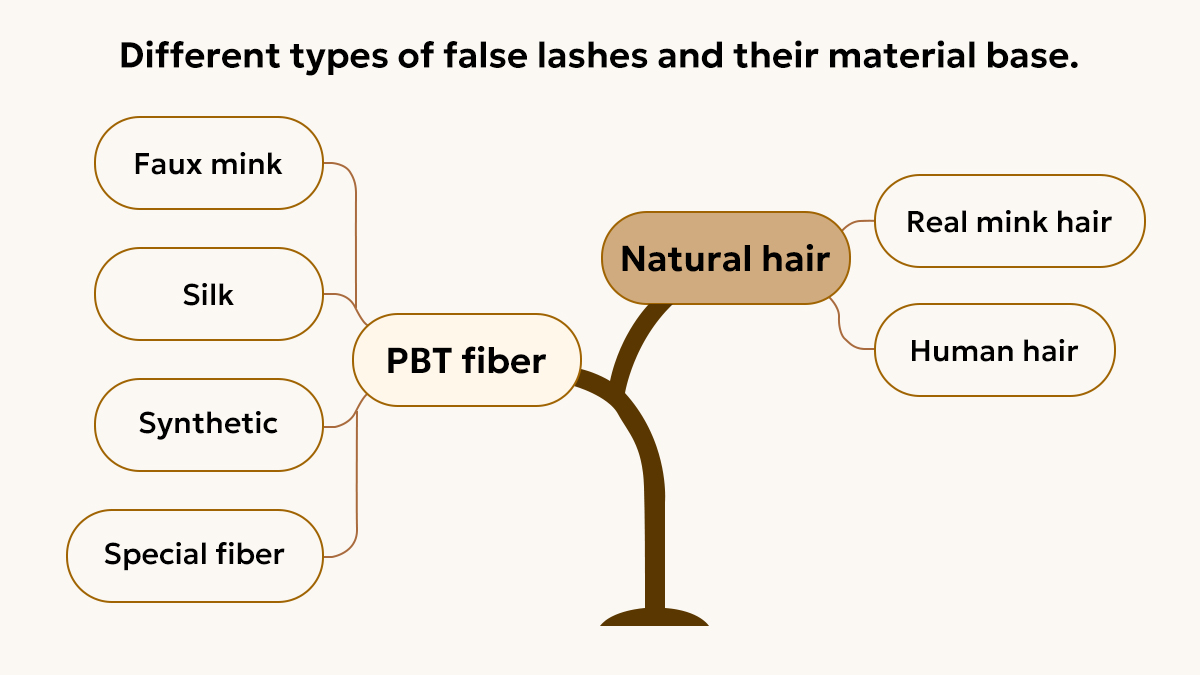
Most fake lashes today are made from synthetic PBT (polybutylene terephthalate) fiber, while some false eyelashes are made from natural materials such as real mink fur or human hair. PBT has become the dominant material in the modern lash industry because it can be engineered for different levels of softness, shine, thickness, curl, and texture.
Many common lash names do not represent completely different raw materials. Faux mink lashes, silk lashes, synthetic lashes, and many specialty fibers are primarily PBT-based, with their differences created through fiber structure, surface treatment, tapering, and other manufacturing processes.
The materials used also depend on the type of false lashes. Strip lashes and cluster lashes consist not only of lash fibers but also a lash band or base that holds the fibers together.** These bands may be made from materials such as cotton thread or transparent synthetic materials, with different structures designed for flexibility, comfort, and appearance. Lash extensions, by comparison, are individual fibers without a continuous lash band.
This guide explains the main materials used to make fake lashes, how different PBT-based fibers compare, what lash bands are made of, which natural materials are still used, and how these materials differ across modern false eyelash products.
| Material Category | Base Material | Common Names / Types | Key Characteristics | Common Applications |
|---|---|---|---|---|
| PBT Synthetic Fiber | PBT (Polybutylene Terephthalate) | Faux Mink, Silk, Synthetic | Can be processed to create different levels of softness, shine, thickness, and texture. It is the most widely used fiber material in modern false lashes. | Strip Lashes, Cluster Lashes, Lash Extensions |
| Specialty PBT Fiber | Specially structured or processed PBT | Triangle Fiber, Laser-Cut Fiber, Human Hair Effect Fiber | Uses different fiber structures, cross-sections, or processing techniques to create distinctive textures, visual effects, and performance. | Strip Lashes, Cluster Lashes |
| Bamboo Charcoal PBT Fiber | PBT + Bamboo Charcoal | Bamboo Fiber, Bamboo Charcoal Fiber | A PBT-based fiber incorporating bamboo charcoal components; it is not a lash fiber made directly from natural bamboo. | Strip Lashes, Cluster Lashes |
| Real Mink Hair | Natural Mink Fur | Real Mink, Siberian Mink | Soft and natural-looking, but associated with animal welfare concerns and lower consistency and durability than modern synthetic fibers. | Mainly Strip Lashes; occasionally Lash Extensions |
| Human Hair | Natural Human Hair | Human Hair Lashes | Creates a natural appearance, but generally offers weaker curl retention and product consistency than modern synthetic fibers. | Strip Lashes |
| Lash Band / Base | Cotton Thread, Nylon, and Other Synthetic Materials | Cotton Band, Clear Band, Invisible Band, Soft Band | Holds lash fibers together and influences flexibility, visibility, support, comfort, and overall lash appearance. | Strip Lashes, Cluster Lashes |
Modern false lashes are made from both synthetic fibers and natural hair, but synthetic PBT fiber is now the primary material used across the lash industry. Many familiar names—such as faux mink, silk, and synthetic lashes—do not refer to completely different raw materials. Instead, they usually describe PBT fibers that have been processed differently to achieve specific levels of softness, shine, texture, thickness, and visual effect.
Beyond conventional PBT, manufacturers can also develop specialty fibers through different structures, surface treatments, and processing technologies. Natural materials such as real mink fur and human hair are still used in some false lashes, although they are much less common than synthetic alternatives.
PBT (Polybutylene Terephthalate) is the core synthetic material used to make most modern fake lashes. It is a thermoplastic polymer that can be formed into fine, lightweight fibers and precisely processed to achieve the curl, diameter, taper, softness, and finish required for different lash products.
PBT is widely used for strip lashes, cluster lashes, and professional lash extensions because its properties can be controlled consistently during manufacturing. Compared with natural hair, PBT provides better stability in fiber shape, curl, thickness, and overall product consistency.
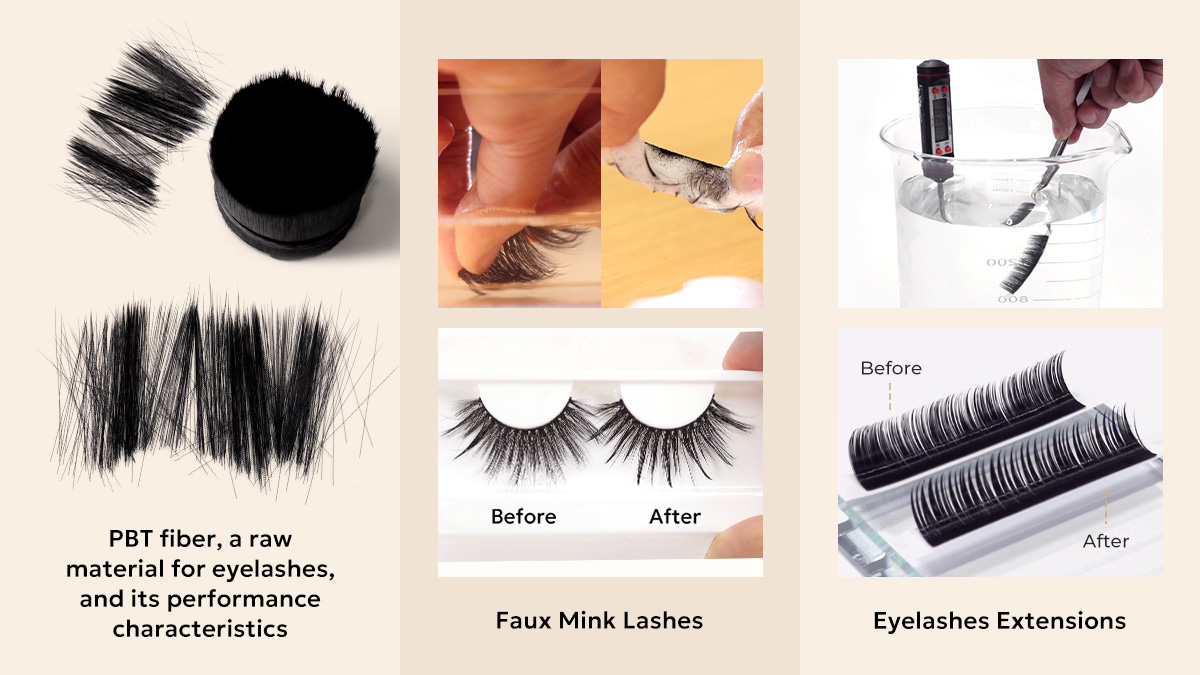
PBT offers several properties that make it particularly suitable for false eyelash manufacturing:
* **Stable Curl:** PBT fibers can be heat-set into different curls and maintain their shape more consistently than many natural fibers.
* **Controlled Diameter:** Fibers can be manufactured in different thicknesses to create anything from fine, lightweight lashes to fuller and more defined styles.
* **Adjustable Softness:** Different fiber grades and processing methods can produce softer or firmer lashes depending on the desired product.
* **Different Surface Finishes:** PBT can be processed to create matte, semi-matte, or glossier finishes.
* **Consistent Production:** Synthetic fibers provide greater consistency in color, diameter, curl, and texture across large production batches.
* **Flexible Styling:** The same base material can be engineered for natural, wispy, fluffy, dramatic, or highly defined lash effects.
One of the most common sources of confusion is that PBT lashes are sold under many different names. **Faux mink lashes, silk lashes, and synthetic lashes are generally made from PBT fiber rather than three completely different raw materials.**
The differences usually come from how the PBT fiber is manufactured and finished. Fiber grade, diameter, taper, surface treatment, softness, cross-sectional structure, and heat-setting processes can all change how the finished lash looks and feels.
This is why two lashes made from the same basic PBT material can have noticeably different softness, shine, weight, texture, and visual effects.
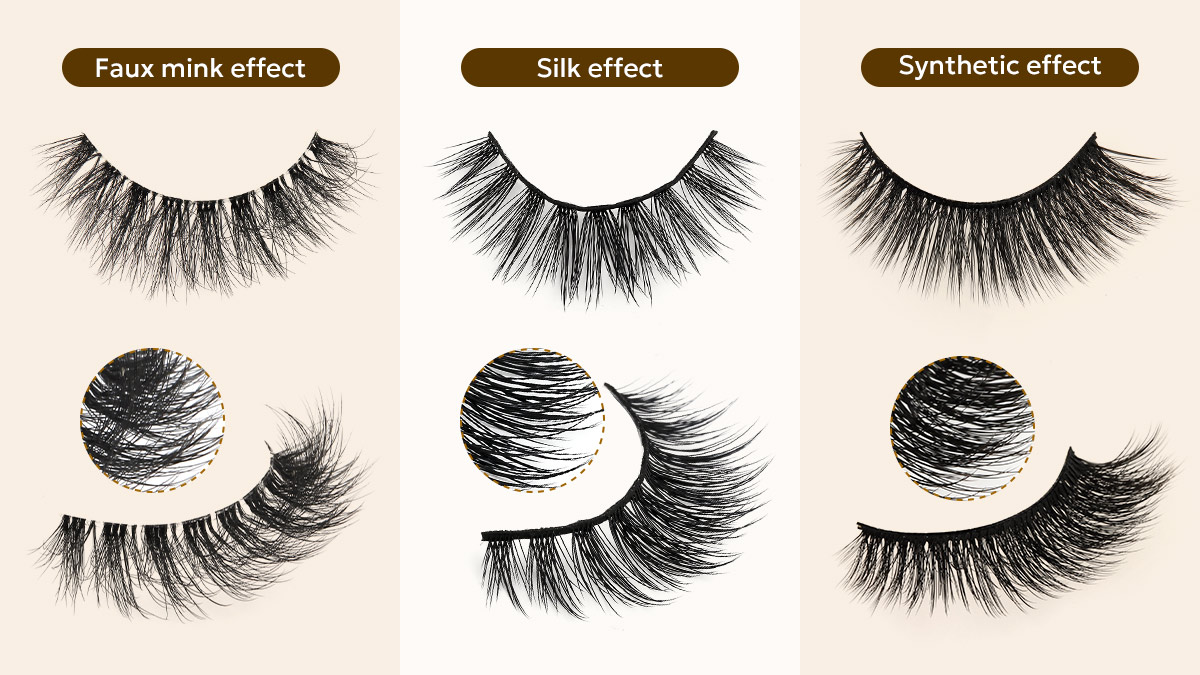
**Faux mink lashes are made from synthetic PBT fiber, not real mink fur.** The fiber is processed to imitate the soft texture, fine taper, and natural appearance traditionally associated with mink hair.
Typical characteristics of faux mink PBT include:
* Soft and flexible fiber texture
* Matte or low-shine surface finish
* Fine, tapered lash tips
* Lightweight appearance
* Suitable for natural, wispy, fluffy, and dramatic lash designs
Faux mink PBT is widely used in **strip lashes, cluster lashes, and lash extensions**. Different fiber diameters, lengths, curls, and layering techniques allow manufacturers to create a broad range of lash styles from the same basic material.
Terms such as *mink-effect lashes*, *vegan mink lashes*, and some *bionic fiber lashes* may also refer to synthetic fibers designed to reproduce mink-like softness and appearance rather than lashes made from real animal fur.
Despite the name, **most modern silk lashes are not made from natural silk. They are generally made from PBT fiber** with a different surface finish and fiber treatment from faux mink lashes.
Silk-style PBT fibers typically have:
* A smoother, more polished surface
* More visible shine than matte faux mink fibers
* A slightly firmer or more defined appearance
* Clean, structured lash lines
Silk PBT can be used in both strip lashes and lash extensions, particularly when a darker, glossier, and more defined lash effect is preferred.
The term “silk lashes” therefore usually describes the **finish and appearance of the synthetic fiber**, rather than the actual raw material.
**Synthetic lashes are also commonly made from PBT fiber.** The term is broader than faux mink or silk and is often used for standard synthetic lash fibers without a specific mink-like or silk-like finish.
Depending on the manufacturing process, synthetic lashes can vary considerably in softness, shine, thickness, and flexibility. They are commonly used for more structured or defined lash styles and remain available across different false eyelash markets.
In practical terms, **faux mink, silk, and synthetic lashes can all share the same PBT base material—the main differences are created through fiber specifications and manufacturing processes rather than entirely different raw materials.**
Beyond conventional faux mink, silk, and synthetic fibers, PBT can be further engineered through changes in fiber structure, cross-section, surface treatment, additives, and manufacturing techniques. These **specialty PBT-based fibers** are mainly developed to create distinctive textures, visual effects, or product performance for strip lashes and cluster lashes.
Although some of these fibers are marketed under unique material names, PBT generally remains their primary base material.
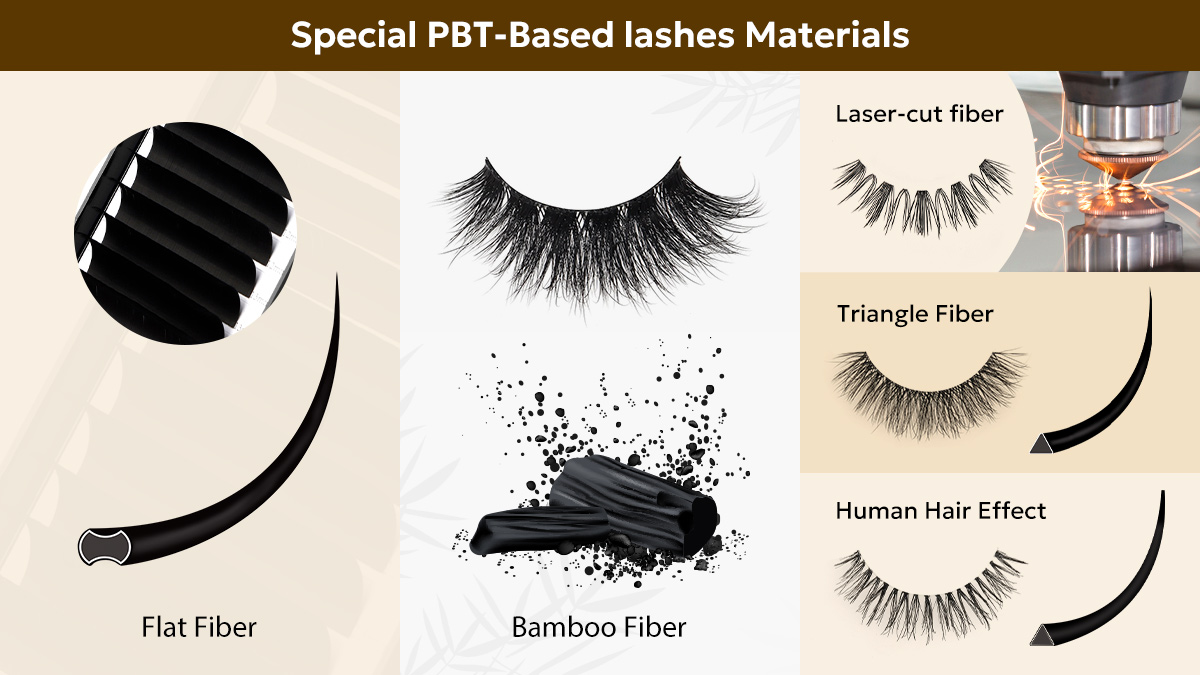
Bamboo charcoal PBT fiber is a specialty synthetic fiber made by incorporating **bamboo charcoal components into a PBT-based material**. Despite being commonly marketed as *bamboo fiber* or *bamboo lashes*, these lashes are not made simply by turning natural bamboo into eyelash fibers.
The resulting fiber maintains the manufacturing stability of PBT while creating a naturally deep, matte appearance. It can be processed into different lash lengths, curls, and styles for **strip lashes and cluster lashes**.
Mega Beauty has developed bamboo charcoal PBT fibers for false lash production, providing brands with an alternative fiber option for developing differentiated lash collections.
Triangle fiber is a specially structured PBT fiber with a **triangular cross-section instead of a conventional round profile**. Changing the cross-sectional structure affects the way the fiber reflects light and creates a more dimensional visual effect.
This type of fiber can be used to create:
* More noticeable light reflection
* Greater visual dimension
* Defined lash texture
* Distinctive layered effects
Triangle PBT fiber is mainly used in **strip lashes and cluster lashes**, where fiber structure can play an important role in the final visual style.
Laser-cut fiber is better understood as a **specialized PBT processing technique rather than a completely different raw material**. Laser technology is applied during fiber processing to create specific shapes, textures, or structural effects that are difficult to achieve with conventional fiber processing.
This technique gives manufacturers greater flexibility when developing distinctive lash designs and can also improve production efficiency for certain fiber structures.
Laser-cut PBT is primarily used in **strip lashes and cluster lashes**, particularly for designs that require more specialized fiber shapes or visual effects.
Human hair effect fiber is a **synthetic PBT-based fiber engineered to imitate the appearance of natural human hair**. It should not be confused with real human hair lashes.
Through controlled tapering, texture, and surface treatment, the fiber can create a softer and more natural-looking appearance while retaining the consistency and shape stability of synthetic PBT.
Human hair effect PBT is mainly used in **strip lashes and cluster lashes** for styles designed to reproduce a lightweight, natural lash appearance.
These specialty fibers demonstrate how the same PBT base material can be modified through different formulations, structures, and processing technologies to produce false lashes with significantly different visual and performance characteristics.
Before synthetic PBT fibers became widely used, natural hair and animal fur were common materials for producing false eyelashes. Today, natural materials represent a much smaller part of the lash market, as synthetic fibers offer greater consistency, curl stability, and flexibility in product design.
The two main natural materials still found in false lashes are **real mink fur and human hair**. They are primarily used for strip lashes, although real mink has also been used in lash extensions on a much smaller scale.
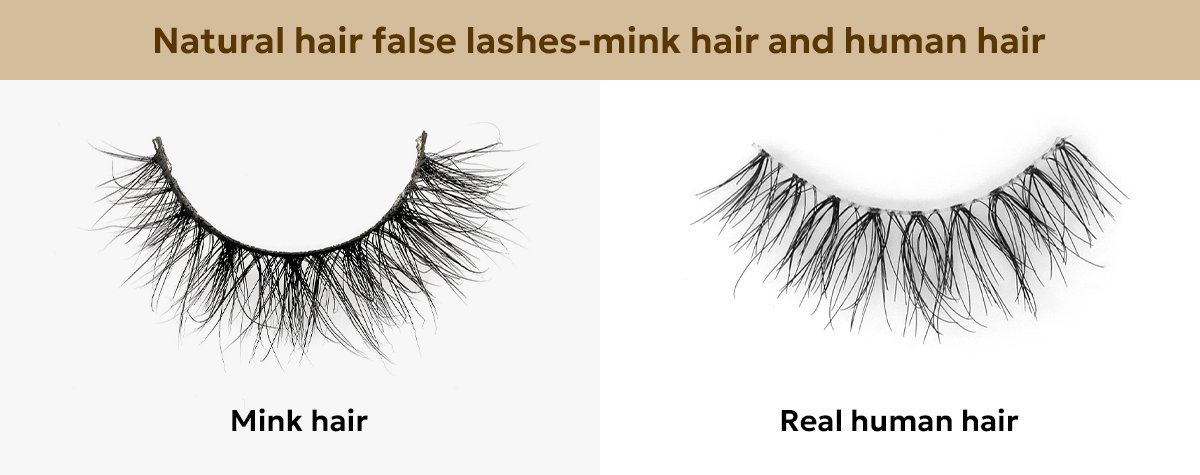
**Real mink lashes are made from natural mink fur**, unlike faux mink lashes, which are made from synthetic PBT fiber. Real mink became popular because the fine natural hairs create a soft, lightweight, and naturally irregular appearance.
Real mink hair is mainly used for **strip lashes**. Mink lash extensions also exist, but they are much less common than synthetic PBT lash extensions.
Compared with PBT fiber, natural mink hair has several limitations:
* Natural hairs can vary in thickness, length, and texture.
* Curl and shape are generally less consistent than heat-set synthetic fibers.
* Large-scale production is more difficult to standardize.
* Animal welfare and ethical concerns have reduced demand in many markets.
As synthetic fiber technology has improved, **faux mink PBT has replaced real mink in many lash products**, offering a similar soft and natural appearance with greater consistency and more manufacturing flexibility.
**Human hair lashes are made from real human hair** and are primarily used for strip eyelashes. Because natural hair has fine, irregular characteristics, these lashes can create a subtle and realistic appearance.
However, human hair is more difficult to standardize than synthetic PBT fiber. Natural variations in the hair can affect thickness, texture, curl, and overall consistency, while its curl retention is generally more limited than that of heat-set synthetic fibers.
For these reasons, real human hair is now less common in modern false lash manufacturing, with many brands moving toward synthetic fibers that can reproduce a similar natural appearance while offering more consistent performance.
Real human hair lashes should also be distinguished from **human hair effect lashes**. Human hair effect lashes are made from synthetic PBT fiber that is processed to imitate the fine texture and natural appearance of human hair; they do not contain real human hair.
Overall, natural hair materials remain part of the false eyelash market, but **synthetic PBT fiber has become the more widely used option for modern lash production** because it allows manufacturers to achieve more consistent specifications, finishes, curls, and styles.
Although strip lashes, cluster lashes, and lash extensions can all use PBT fiber, their fiber specifications and product structures are different. Strip and cluster lashes allow more variation in fiber effects and also require a band or base to hold the fibers together, while lash extensions consist of individual fibers and place greater emphasis on curl, diameter, taper, weight, and fiber shape.
| Product Type | Common Fiber Materials | Structure | Main Material Focus |
Strip Lashes | PBT, Real Mink, Human Hair | Lash fibers attached to a full band | Softness, texture, layering, visual effect, and band compatibility |
Cluster Lashes | Mainly PBT | Small groups of fibers attached to a cluster base | Lightweight feel, flexibility, fiber effect, and base structure |
Lash Extensions | Mainly PBT; Real Mink is less common | Individual fibers without a continuous band | Curl, diameter, taper, weight, and fiber shape |
In other words, the same base material can be processed differently depending on the type of lash product. PBT used for a soft strip lash may have different specifications and processing requirements from PBT used for cluster lashes or professional lash extensions.
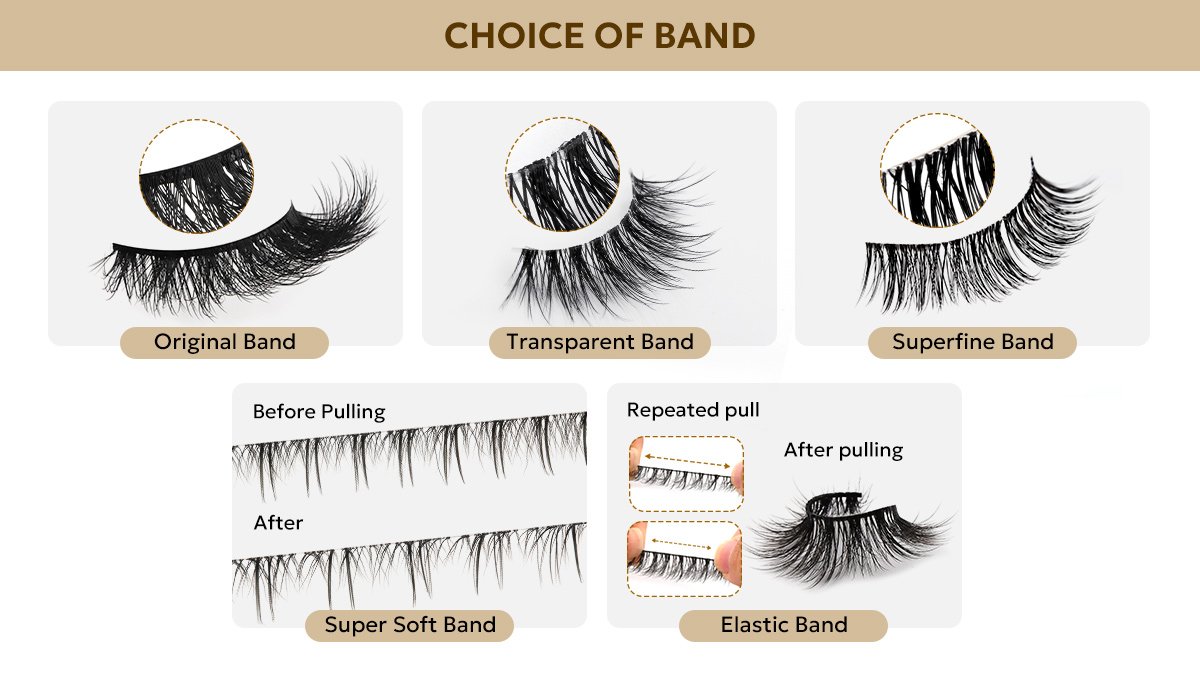
In strip lashes and cluster lashes, the lash fibers are only part of the product. The fibers are attached to a **lash band or base**, which helps hold the lash structure together and affects flexibility, comfort, visibility, and the overall appearance of the finished lashes.
Common eyelash band materials and structures include:
* **Cotton Bands:** Made with cotton thread to create a soft, flexible band. They are commonly used for strip lashes and are available in different thicknesses and densities.
* **Clear Bands:** Usually made from transparent synthetic materials, creating a less visible base that blends more naturally with the lash line.
* **Invisible or Ultra-Thin Bands:** Designed with very fine synthetic materials or minimal band structures to reduce the visibility and weight of the lash base.
* **Cluster Lash Bases:** Cluster lashes use small bases rather than a continuous strip band. Depending on the design, the fibers may be bonded or arranged into different base structures to keep each cluster together.
The choice of lash band is important because **the same lash fibers can feel and look different when combined with different band structures**. A thicker band provides more support and definition, while a thin or transparent band generally creates a lighter and more natural appearance.
Lash extensions are different because individual extension fibers are applied separately and therefore **do not use a continuous lash band**.
Some false lashes are marketed as bamboo lashes, but they are not necessarily made directly from natural bamboo. **Bamboo charcoal lashes can use PBT-based fiber incorporating bamboo charcoal components**, combining a synthetic PBT base with bamboo-derived material. The exact composition may vary by manufacturer, so “bamboo lashes” should not automatically be interpreted as lashes made entirely from natural bamboo.
Some fake lashes are made from **real mink fur**, particularly traditional mink strip lashes. However, many products marketed as mink-style lashes today are actually **faux mink lashes made from synthetic PBT fiber**. Real mink and faux mink are therefore two different material categories.
Faux mink lashes are generally made from synthetic PBT fiber rather than real mink fur.** The PBT is processed to create a soft texture, fine taper, and natural-looking finish that imitates the appearance traditionally associated with mink hair.
Most modern **silk lashes are not made from natural silk**. The term usually refers to PBT synthetic fibers that have been processed to achieve a smoother or slightly glossier finish. In the lash industry, “silk” commonly describes a fiber style or finish rather than the actual raw material.
Yes. **Synthetic PBT fiber is the primary material used in modern false lashes**, including many products marketed as faux mink, silk, and synthetic lashes. Natural materials such as real mink fur and human hair are still available, but synthetic fibers are more widely used because their curl, thickness, texture, and finish can be controlled more consistently during manufacturing.
So, what are fake lashes made of? **Most modern false lashes are made from PBT synthetic fiber**, including many products marketed as faux mink, silk, synthetic, and specialty fiber lashes. Natural materials such as real mink fur and human hair are still used, but they represent a smaller part of today’s lash market.
The final look and performance of false lashes depend not only on the base material, but also on how the fiber is processed, structured, tapered, curled, and combined with different lash bands or bases.
For lash brands and wholesalers developing their own product lines, **Mega Beauty offers a wide range of false lash materials, fiber effects, lash structures, and customization options** for strip lashes, cluster lashes, and professional lash products. Explore our **wholesale lashes** or contact us to develop custom lash products for your brand.
No.18 B, Laoshan Road, Laoshan District, Qingdao City,Shandong Province
Copyright © 2025 Qingdao Mega Beauty Lashes Co., Ltd. All Rights Reserved.
