
Introduction: The Lash Industry Enters a New Phase of Natural, Technical, and Efficiency-Driven Growth
In 2026, the global eyelash market is entering a more structured and efficiency-driven phase. Based on recent order data, trade show feedback, and wholesale purchasing behavior, several key shifts are becoming clear across strip lashes,cluster lashes, lash extensions, and adhesive products.
Rather than chasing short-term visual trends, brands and distributors are now prioritizing cost-performance balance, production stability, and long-term profitability. These structural changes are redefining how the industry competes in both mature and emerging markets.
This report outlines the most important product, material, and supply-chain trends shaping the global lash industry in 2026.
2026 Quick Industry Snapshot
·Natural & Wispy styles dominate strip lash demand
·Self-adhesive lashes and pre-glued cluster lashes are emerging as a new product upgrade direction
·Cluster lashes remain a high-volume category, with demand shifting toward bulk packs, kits, and cost-performance solutions
·0.07mm remains the standard thickness for extensions
·PBT fiber holds the largest global market share
·Safety-certified glue is mandatory in EU markets
·Direct sourcing from manufacturers is increasing
2026 Strip Lashes Trends: Natural Styles Dominated by High-Quality PBT Fiber
Natural and Wispy Styles as the Mainstream Direction
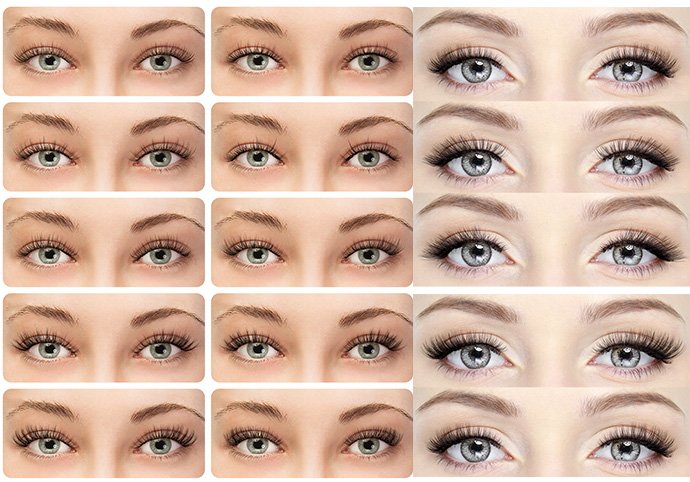
By 2026, Natural and Wispy strip lashes have firmly established themselves as the mainstream style direction. These designs focus on:
·Soft density
·Irregular, lash-like patterns
·A realistic finish that closely mimics natural lash growth
Rather than making lashes look obviously artificial, the goal is to achieve a refined, effortless appearance that appeals to a broader consumer base.Orders for Natural and Wispy strip lashes account for over 60% of wholesale demand in key markets.
Balanced length and density, clean structure, and high versatility. These styles offer the highest market acceptance and are suitable for long-term daily wear.
Alternating lengths and layered distribution create depth and texture. Wispy lashes replicate the randomness of real lashes, delivering a more natural yet visually enhanced effect.
Core Material Behind the Trend
Both Natural and Wispy strip lashes are predominantly made from high-quality PBT fiber, which has far surpassed real mink hair in terms of market share. PBT fiber offers:
·Superior consistency
·Better durability
·Greater scalability for mass production
·More stable quality across batches
As a result, PBT-based strip lashes have become the industry standard rather than a trend.
Strip Lashes Material Trends: PBT Fiber Remains the Industry Foundation
The Unshakable Position of PBT Fiber
In 2026, PBT fiber remains the most widely used and trusted material in the strip lashes market. It provides the optimal balance between:
·Cost control
·Visual performance
·Softness and comfort
·Manufacturing stability
·No alternative material has been able to replace PBT fiber on a large scale.
Functional Upgrades: Bamboo Charcoal + PBT fiber
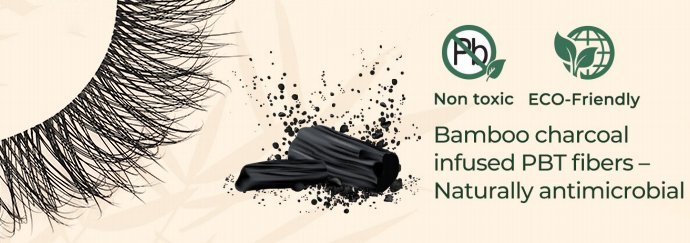
Instead of replacing PBT fiber, innovation is focused on enhancing it. One notable development is the use of bamboo charcoal fiber blended with PBT, offering:
·Improved softness
·Matte texture
·Antibacterial properties
·Controlled production costs
This material combination is currently being tested and adopted by an increasing number of international brands as a performance-enhanced option.
Cluster Lashes: From High-Growth, High-Margin to Stable, Cost-Performance Driven
Cluster lashes remain one of the most resilient and high-volume product categories in the lash industry. After reaching peak popularity in previous years, the category has now entered a more stable and mature phase in 2026.
Under current global economic conditions, the market is shifting toward cost-performance efficiency, bulk purchasing, and simplified product solutions. As a result, new formats such as DIY lash extensions and cluster lash extensions have emerged to meet consumer demand.
Compared to earlier styles like pre-mapped cluster lashes, current demand is increasingly concentrated on:
·Large-volume tray packaging
·Cost-effective bulk options
·Practical, profit-oriented product structures
In particular, cluster lash extension kits have become a key growth driver. These kits typically combine:
·Cluster lashes
·Lash bond & seal
·Lash remover
·Lash applicator
·Simple, non-luxury packaging
This bundled format allows brands and distributors to increase average order value while offering complete, ready-to-use solutions for end users.
Mega Beauty aligns with this trend by providing highly cost-effective cluster lash products and compatible tools, helping wholesalers and private-label brands maximize margins while maintaining consistent product quality.
Note: Some cluster lash designs in the U.S. may involve intellectual property considerations, and compliance checks are recommended for brands and suppliers.
New Trend: Self-Adhesive Lashes (Press-On / Pop Lashes)
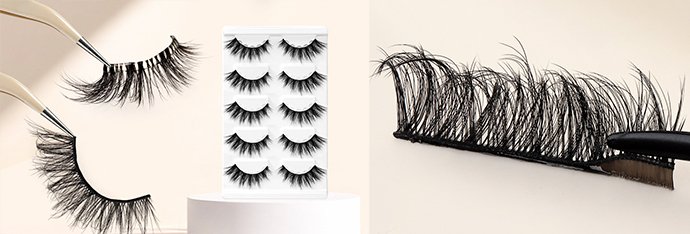
One of the most discussed innovations at recent trade shows is the rise of self-adhesive lashes, also known as press-on lashes or pop lashes. These products eliminate the need for separate lash glue by integrating a pre-applied adhesive strip directly onto the lash band, enabling faster and more convenient application.
This technology can be applied to both strip lashes and cluster lashes. However, market feedback shows that self-adhesive cluster lashes are gaining significantly stronger traction. Since cluster lashes already represent a large share of the global lash market, the upgraded pre-glued cluster format is emerging as a key growth opportunity for 2026.
Compared to cluster styles, self-adhesive strip lashes are still in an earlier adoption phase. Nevertheless, they offer brands a valuable opportunity to expand product lines, differentiate positioning, and capture early demand as the trend continues to develop.
From a manufacturer perspective, the core focus is no longer just the lash style, but the performance of the adhesive strip. Wholesale buyers are primarily concerned with:
·Adhesion strength
·Reusability
·Retention duration (targeting 3–5 days of wear)
In response to this trend, Mega Beauty has conducted extensive R&D and testing on different adhesive strip formulations, while also developing packaging solutions that significantly reduce adhesive loss during storage and transportation.
Salon Lash Extension Trends: Efficiency, Consistency, and Natural Results
1. Lash Extensions Remain a High-Volume, High-Demand Category
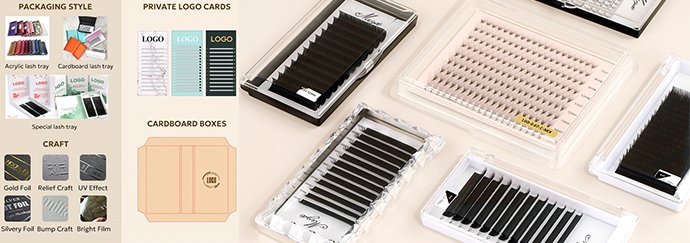
Lash extensions continue to be one of the most stable and high-volume product categories in the global lash market. Orders remain strong across multiple regions, particularly for faux mink lash extensions, easy fan lashes, and premade fan lashes, which are widely used in professional salon environments.
These products have become core, repeat-purchase items rather than trend-driven SKUs, providing consistent demand and predictable turnover for both brands and suppliers.
From a technical perspective, 0.07mm thickness is most commonly used across these extension products, as it delivers a balanced combination of light weight, natural appearance, and structural stability. For this reason, it has become the standard specification applied to classic, volume, premade, and easy fan extensions.Orders for 0.07mm lash extensions remain the highest-volume SKU across multiple regions.
Another notable market shift is that more salons are choosing to source lash extension products directly, rather than purchasing through local wholesalers. This trend is driven by the need for better cost control, consistent quality, and stable supply, and reflects a broader move toward more direct and efficient procurement models within the professional lash industry.
2. New Structure Products Gaining Momentum
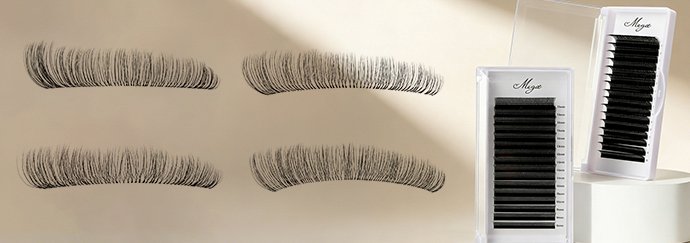
U Shape Lashes
Introduced in late 2025, U Shape Lashes quickly gained attention for their cleaner separation and more natural results after application. Among them, U Shape YY Lashes (2D-U) have become the best-selling structure, combining natural definition with improved application efficiency. Demand continues to rise as more technicians recognize their visual advantages.
W Lashes (Clover Lashes)
W lashes are a classic and long-standing favorite in the market. Available in multiple structures from 3D to 8D, they offer excellent volume at a competitive price point. Their high cost-performance ratio makes them especially popular for salons requiring bulk usage and consistent results.
3. Material and Performance Priorities
Regardless of structure, the key material requirements remain consistent:
·Matte black finish
·Lightweight softness
·Long-lasting curl retention
Efficiency-driven designs that support scalable salon operations will continue to dominate extension trends in 2026.
Lash Glue Trends: Performance Innovation Meets Safety Awareness
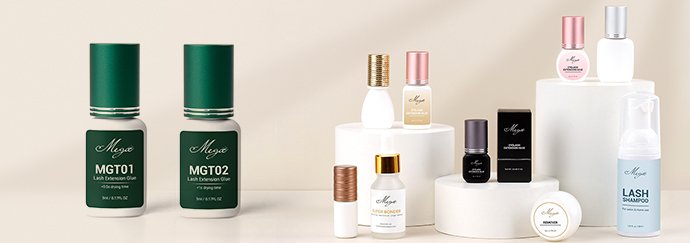
Based on feedback collected from offline trade shows and ongoing online orders, customer priorities for lash glue products have become increasingly clear. In 2026, buyers are no longer focused on a single performance feature. Instead, they consistently emphasize four core factors:
Fast drying speed
High safety standards
Strong environmental adaptability
Long retention performance
Among these, product safety has become the most critical concern. This trend is especially evident in the European market, where customers place strong importance on certifications, compliance documentation, and overall formulation safety. Reliable certification and proven safety performance are now essential requirements rather than added advantages.
Key Trend Product 1: All-Weather Lash Glue
All-Weather Lash Glue, introduced in the second half of 2025, has quickly gained strong market acceptance. After extensive testing and real-market use, customer feedback has been highly positive, with stable and repeat orders continuing to grow.
This formulation is designed to maintain consistent bonding performance across a wide range of environmental conditions. Test results show that the glue performs reliably within: 25%–75%RH,64.4–82.4℉ (18–28℃)
Key Trend Product 2: Alcohol-Free Super Bonder
The alcohol-free Super Bonder, launched in 2025, has also seen rapidly increasing demand. Customers who have tested this product report high satisfaction levels, and order volumes continue to rise.
This super bonder offers multiple functional benefits:
Accelerates adhesive curing speed
Extends lash retention time
Seals the adhesive to reduce evaporation-related irritants
Enhances overall eye safety during and after application
By eliminating alcohol from the formula, the product further reduces irritation risks while maintaining strong performance, making it an ideal solution for salons that prioritize client comfort and safety.
Trend Summary
In 2026, lash glue innovation is driven not only by performance improvements but by a growing emphasis on safety, compliance, and reliability. Products that combine fast curing, environmental adaptability, long retention, and certified safety standards are becoming the new benchmark for professional lash applications.
Global Market Characteristics and Opportunities

Mature Markets: United States, United Kingdom, Germany, Australia
Mature markets continue to demand high product standards, but purchasing behavior has become more rational. Brands and distributors are increasingly focused on:
·Cost efficiency without sacrificing quality
·Stable supply chains and consistent batches
·Products with long-term repeat potential rather than short-term trends
Price sensitivity is rising, but quality compromises are not acceptable. Suppliers that can deliver reliable products at a reasonable and sustainable cost level are better positioned for long-term cooperation.
High-Growth Markets: Mexico, Brazil, Middle East,Africa
Emerging markets continue to expand rapidly, with strong acceptance of new styles and social-media-driven trends. Brands in these regions are often in a growth or scaling phase, making them especially sensitive to:
·Competitive pricing
·Scalable product solutions
·Healthy profit margins
Across both mature and emerging markets, one trend is clear: controlling costs while protecting brand profitability has become a global priority.
Consumer Behavior Insights: Regional Preferences and Social-Driven Decisions
Europe
European consumers favor natural, understated beauty. Lightweight lashes, matte black finishes, and“barely-there” wearing experiences are increasingly preferred. Sustainability, material safety, and comfort play an important role in purchasing decisions.
United States
In the U.S. market, fluffy styles remain dominant, but with a stronger emphasis on structure, layering, and natural definition. Consumers are moving away from overly dramatic looks toward lashes that enhance the eyes while still appearing realistic.
The Role of Social Media

Platforms such as TikTok and Instagram continue to shape consumer demand and trend cycles. Tutorials, product reviews, and transformation content strongly influence what styles and product types gain traction in different regions.
Marketing and Social Trends: Short-Form Content Influences B2B Decisions
Short-video platforms such as TikTok and Instagram Reels are no longer limited to consumer influence. Brand owners, wholesalers, and distributors increasingly rely on social content to:
Identify emerging trends
Evaluate product professionalism
Assess supplier credibility
For B2B brands, content has become a key factor in building trust and long-term partnerships.
Conclusion: Strategic Directions for 2026
As 2026 unfolds, brands that align product development with cost efficiency, material stability, and scalable supply chains will gain a competitive edge.
For distributors and private-label brands planning their 2026 sourcing strategy, understanding these trends early allows for better product positioning and healthier margins.
Monitoring these developments now can help ensure that product offerings stay relevant, profitable, and aligned with evolving consumer and salon demands.
Key Trend Keywords:
Natural · Lightweight · PBT Fiber · Efficiency · Cost-Performance · Social-Driven Growth
No.18 B, Laoshan Road, Laoshan District, Qingdao City,Shandong Province
Copyright © 2025 Qingdao Mega Beauty Lashes Co., Ltd. All Rights Reserved.
