
Introduction
For salon owners and lash distributors, lash extension glue is arguably the most critical and sensitive component of the entire eyelash business. A high-quality, correctly matched adhesive can guarantee a seamless application and an impressive retention. Conversely, a poorly chosen glue leads to frustrating premature fallout, severe allergic reactions, and for wholesalers, legal compliance nightmares at international customs.
But how do you navigate the overwhelming options on the market?
Choosing the perfect lash extension glue comes down to a few primary benchmarks, though the full decision involves deeper technical variables.
·For Salon Owners, the non-negotiable priorities are operational safety (minimizing fumes and chemical sensitivity to prevent client complaints) paired with matching the glue's drying speed to your specific salon micro-climate and lash styles.
·For Brand Wholesalers, the focus shifts to market-level dynamics—ensuring regional regulatory compliance (like MSDS or REACH) tailored to your target country, managing long-distance transit shelf-life, and selecting versatile formulas that accommodate the average seasonal humidity of your entire target region.
Beyond these primary baselines, critical nuances ultimately dictate business success.
While 90% of the guides available online are basic tips aimed at beginner lash artists, Mega Beauty, a professional lash manufacturing factory with over 10 years of global B2B experience, approaches this differently. We are breaking down the science of lash adhesives from a high-level manufacturing perspective.
Whether you are a salon owner striving for zero client complaints or a distributor seeking a rock-solid supply chain, this guide will provide the definitive standards you need to make the right choice.
1. The Core Dimensions of Choosing the Perfect Lash Glue
1-1. The Chemical Base & Ingredient Safety (The Regulatory Frontier)
When evaluating a lash adhesive, the ingredient list is your first line of defense. For salon owners, it dictates client comfort and retention; for wholesalers, it determines whether a shipment smoothly passes customs or gets seized.
The Truth About Formaldehyde in Lash Adhesives
Let us address the most common misconception in the beauty industry: no reputable lash factory actively adds formaldehyde into lash extension glues.
The true culprit is Cyanoacrylate, the main active ingredient responsible for instant bonding. Cyanoacrylate is a water-reactive chemical. As it comes into contact with ambient moisture in the air and begins its curing process (polymerization), it releases trace amounts of formaldehyde gas as an unavoidable chemical by-product.
While high-quality glues keep these emissions strictly within international safety thresholds, the raw material processing standard makes all the difference.
Ethyl vs. Alkoxy: Choosing Your Chemical Backbone
Most professional adhesives on the market are formulated using one of two primary chemical bases:
·Ethyl Cyanoacrylate: The industry standard for high-performance glues. It offers exceptionally fast drying times and an elite retention. However, it exhibits higher volatility, meaning it releases more noticeable fumes and odor during curing.
·Alkoxy/Ethoxyethyl Cyanoacrylate: A modified, large-molecule formula designed for sensitive eyes. Because it vaporizes much slower, it produces virtually zero fumes or irritation.
Comprehensive Supply Solutions
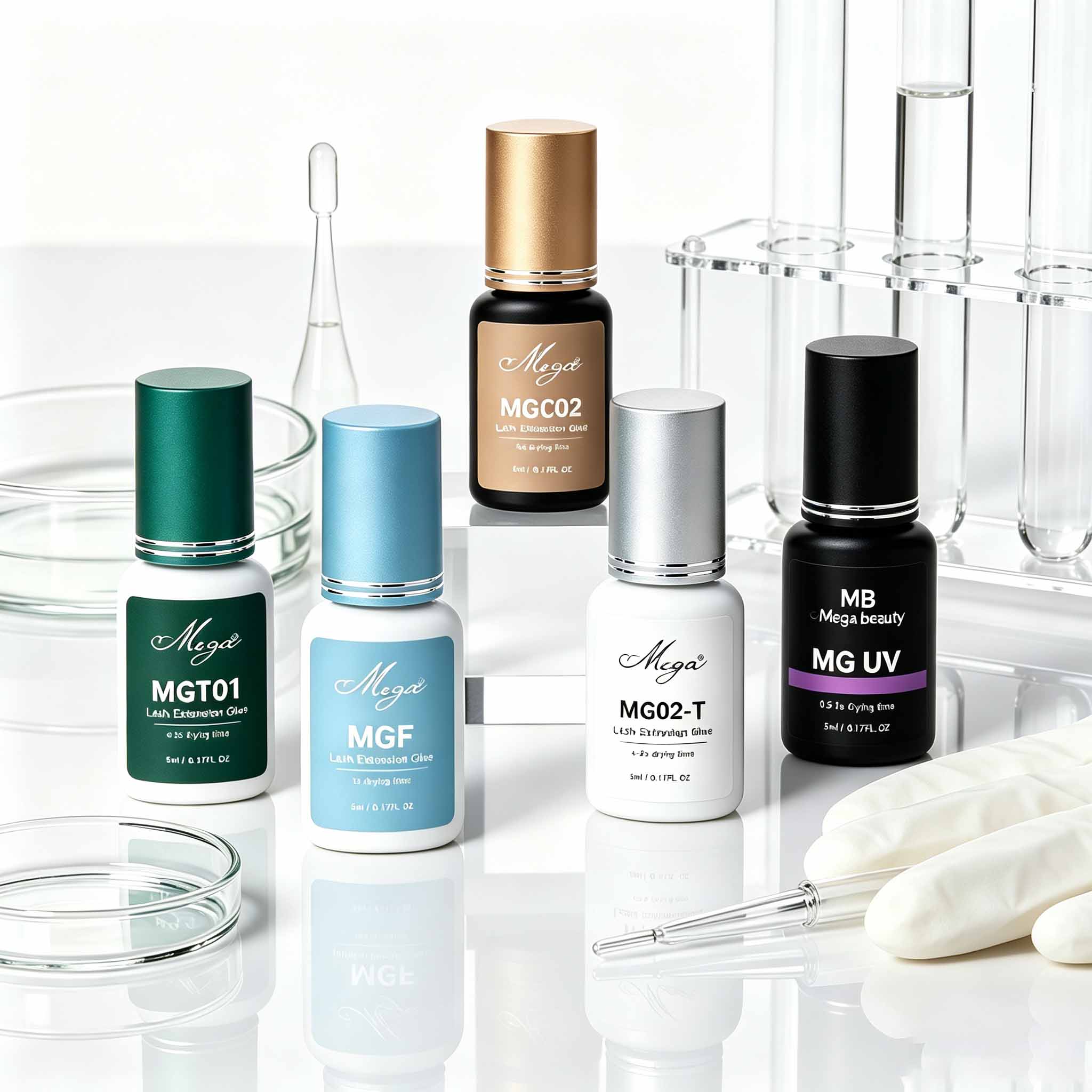
To help global partners cover every segment of the lash market, Mega Beauty offers a comprehensive lash extension adhesive portfolio. Our product range includes high-performance ethyl-based adhesives for high-volume salons, ultra-gentle alkoxy-based adhesives for sensitive clients, and advanced PMMA-Free & Hydroquinone-Free formulas developed for premium brands seeking unique market differentiation.
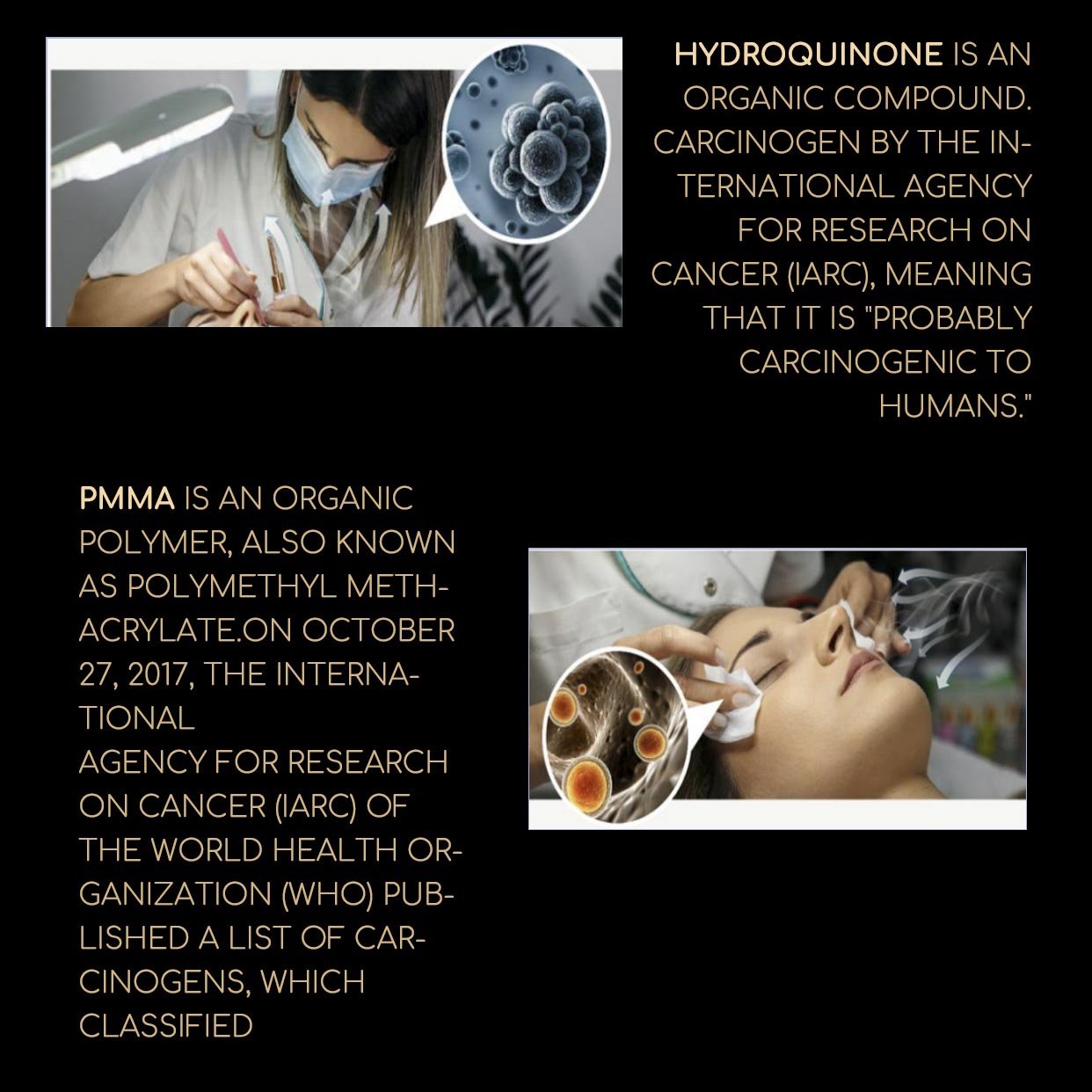
Professional Tip: Why Choose PMMA-Free & Hydroquinone-Free Formulations?
·The Health & Regulatory Red Line: PMMA (Polymethyl Methacrylate) and Hydroquinone are classified as Class III Carcinogens by the International Agency for Research on Cancer (IARC) of the World Health Organization (WHO). Due to these chemical and carcinogen risks, strict cosmetics and health regulations in South Korea, Canada, and California (USA) explicitly prohibit or heavily restrict lash adhesives containing these two ingredients.
·Protecting Lash Artists & Clients: Traditional adhesives compromise long-term health through daily chemical exposure. Mega Beauty's PMMA-Free & Hydroquinone-Free formula is specifically engineered as a cleaner, non-toxic alternative. It eliminates severe toxic fumes and allergen tracking points, prioritizing the respiratory and ocular health of both the lash artist—who inhales these vapors daily—and the end client.
Adhesive Formulation Blueprint: Chemical Bases & Trade-offs
| Chemical Formulation Combination | Formaldehyde & Fume Level | Target Audience & Ideal Applications |
| Ethyl Cyanoacrylate Formulation | Releases trace amounts of formaldehyde gas within international safety standards during manufacturing and curing; lash artists and clients will notice a distinct, pungent odor during application. | High-volume commercial salons prioritizing maximum efficiency: Ideal for standard client demographics who are not chemically sensitive and where salons require fast application to maximize daily client turnover and revenue. |
| Alkoxy/Ethoxyethyl Cyanoacrylate Formulation | Gas emissions generated during the chemical reaction are near-zero, resulting in virtually no eye-stinging odor or fumes during the application process. | Boutique lash studios focusing on premium comfort and anti-allergy services: Specifically tailored for niche consumer groups with hyper-sensitive skin who suffer severe adverse reactions to traditional glue fumes. |
| Alkoxy/Ethoxyethyl + PMMA-Free & Hydroquinone-Free Formulation | Free from high-risk carcinogens and strong sensitizers, this formula reduces chemical odors and vapor emissions to the bare minimum while cutting off the risk of cumulative toxic gas inhalation at the source. | Premium clean-beauty brands, multinational distributors, and luxury salons prioritizing workplace wellness: Perfectly aligns with the world's strictest cosmetics import regulations, such as those in Canada, South Korea, and California (Prop 65); specifically engineered to safeguard the long-term respiratory health and occupational safety of lash artists working long daily hours. |
1-2. Environment & Climate Adjustment (The Universal Variable)
If ingredients dictate the safety of your adhesive, environmental climate dictates its behavior. For salon owners and brand suppliers alike, room temperature and relative humidity (RH) are the most critical, yet hardest to control, variables in lash extension retention.
The Hard Science: How Humidity Triggers Curing
As established, the active backbone of lash glue is Cyanoacrylate. This chemical is highly water-reactive. It does not "dry" through evaporation; instead, it relies on the microscopic moisture molecules present in the ambient air to trigger a rapid chemical chain reaction called polymerization (curing).
When your room environment fluctuates, the performance of the adhesive changes instantly:
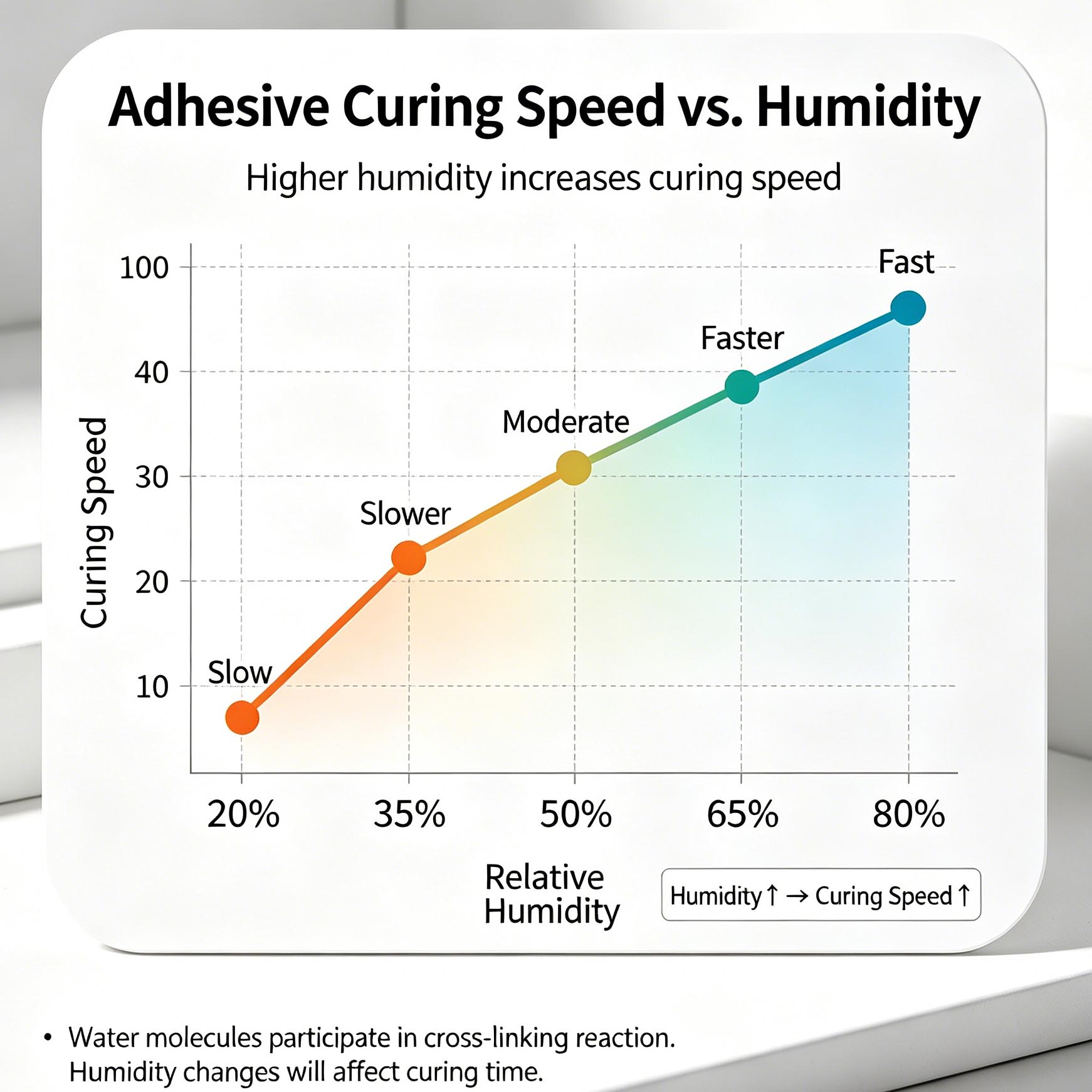
·High Temperature & High Humidity (>60% RH): The abundance of moisture in the air forces the glue to cure aggressively fast. If a lash artist cannot keep up with this accelerated speed, the glue will partially cure before it even touches the natural lash. This results in "shock curing" or a "dry bond"—the extension looks attached, but it has no real physical hold and will brush right off, spiking your salon's client complaint rates.
·Low Temperature & Low Humidity (<40% RH): Without enough moisture to catalyze the reaction, the chemical polymerization stalls. The glue remains wet and tacky for too long, causing lash extensions to slip, lean, or stick to neighboring lashes (creating dangerous "stickies"). Furthermore, slow curing prolongs the emission of fumes, increasing eye irritation, and can trigger "blooming" (a powdery white frosting effect on the lash base).
Matching Glue Formulation to Baseline Environments
Every distinct adhesive formulation is balanced with a unique ratio of stabilizers and thickeners, meaning each glue has an engineered "optimal climate window" preset by the factory. Therefore, the foundational step in selecting an adhesive is choosing a performance profile that naturally aligns with the average temperature and humidity of your daily salon environment or target shipping destination. Buying a premium glue but operating it outside its designed climate threshold will completely disrupt its chemical integrity.
Strategic Sourcing: The Environmental Misplacement Strategy
When salon environments cannot be easily modified with heavy-duty air conditioners or humidifiers, smart businesses use an Environmental Misplacement Strategy to maintain consistency.
By understanding how external factors speed up or slow down a standard formula, you can deliberately pick a glue with contrasting factory-rated specs to achieve your target curing time:
·In Hot & Humid Conditions: If a lash artist wants a true 1-second bond, they should intentionally purchase a slower-curing glue (rated at 2–3 seconds by the factory). The high humidity will automatically accelerate the formula, compressing its drying window to a perfect 1 second.
·In Cold & Dry Conditions: Conversely, to maintain a fast pace in a dry climate, a lash artist must size down to a factory-rated instant dry glue (0.5 seconds). The lack of moisture will drag out the reaction time, making it operate like a standard 1-second adhesive.
Mega Beauty's Global Solution: The All-Weather Breakthrough
To eliminate the logistical headaches and inventory losses caused by shifting seasonal climates, Mega Beauty engineered a highly resilient solution: The All-Weather Glue.
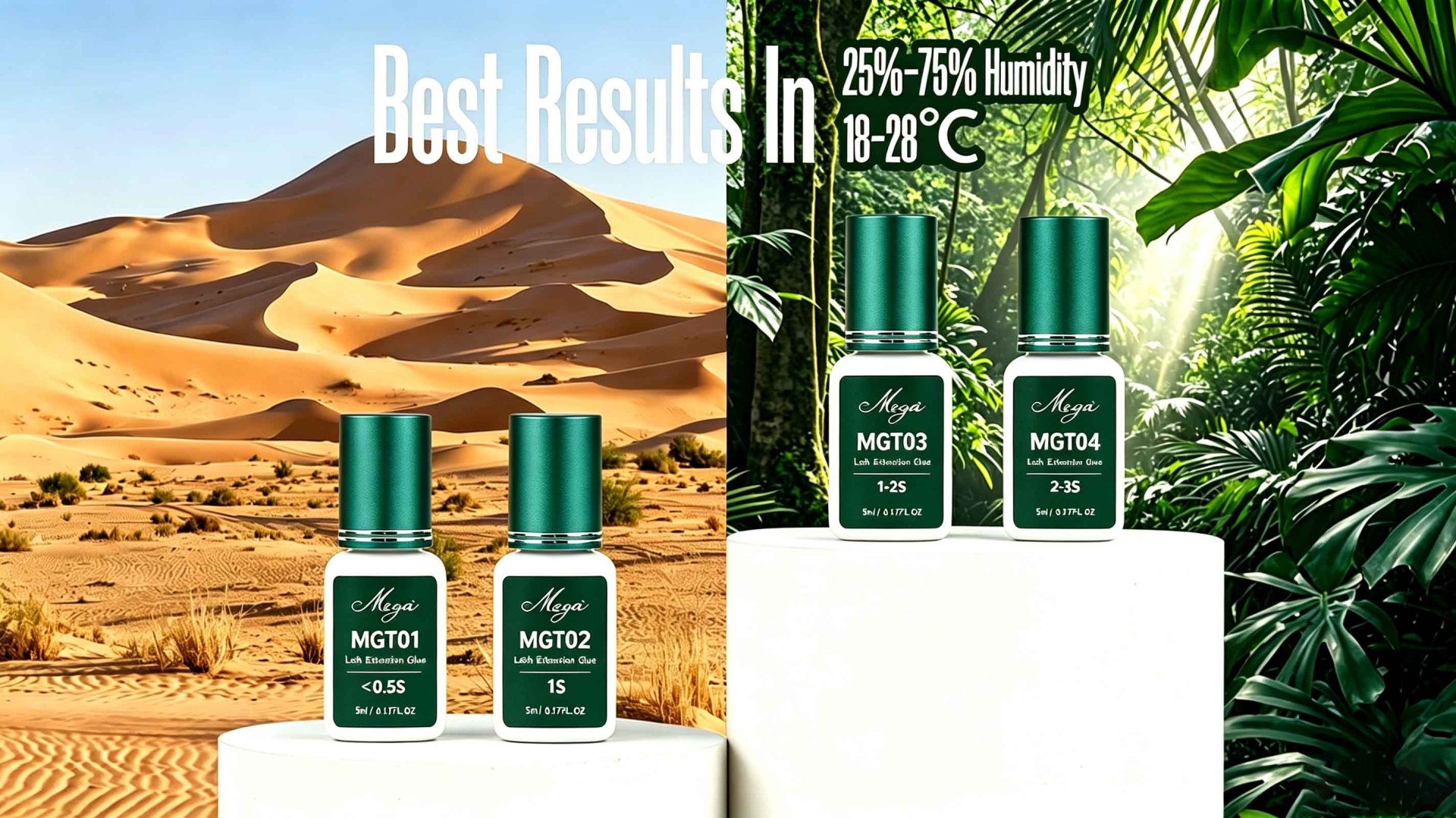
Instead of forcing wholesalers to hoard different batches of inventory for different seasons, our advanced research team successfully broadened the chemical threshold of the polymerization reaction. Mega Beauty's All-Weather formula maintains its precise, factory-calibrated drying speed across an incredibly wide spectrum: 25% to 75% RH and 18°C to 28°C (64.4°F to 82.4°F). This offers global distributors complete supply chain certainty, drastically reducing regional product returns and stock instability.
Climate Adaptation & Adhesives Choice Matrix
| Salon Micro-Climate | Traditional Adhesive Reaction | Traditional Misplacement Fix | Mega Beauty Custom Supply Solution |
High Temp & High Humidity (Summer / Tropical Regions) | Cures too fast; causes shock curing and instant dry bonds. | Source a slower-rated factory formula (2s–3s) to act as a 1s bond. | All-Weather Formula: Locks in stable polymerization up to 75% RH without pre-curing. |
Low Temp & Low Humidity (Winter / Arid Regions) | Cures too slow; causes sliding, stickies, and heavy fume emissions. | Source an ultra-fast factory formula (0.5s) to combat dry air lag. | All-Weather Formula: Maintains instant grab down to 25% RH without blooming. |
Controlled Environment (Standard 45%–55% RH) | Performs exactly to factory specifications. | Match directly to the lash artist's preferred working speed. | Full Formulation Line: Pick the exact Ethyl or Alkoxy baseline suited to your demographic. |
1-3. Drying Time & Viscosity (Matching Technique and lash Extension Architecture)
In the B2B supply chain, a common pitfall for brand buyers is assuming that "faster drying time always equals better quality." This is a costly misconception. In real salon operations, the optimal drying speed is not a fixed number—it is a variable that must be precisely synchronized with the lash artist's mechanical hand speed and the physical engineering of the lash extension itself.
The Tech Synergy: Synchronizing Drying Speed with Artist Experience
Selecting the correct drying time (ranging from 0.5 seconds to 5 seconds) requires an honest assessment of the technician's experience level:
·0.1s – 1s (Ultra-Fast Curing): Engineered exclusively for master lash artists. The technician's physical isolation and placement mechanics must be flawless and immediate. If there is even a split-second delay between dipping the lash in glue and placing it on the natural hair, an ultra-fast glue will partially polymerize mid-air, leading to poor adhesion and premature fallout.
·1s – 2s (Intermediate Pro Standard): The sweet spot for most busy, commercial salons. It offers a perfect balance—fast enough to keep the appointment moving efficiently, yet forgiving enough to allow for micro-adjustments or minor placement corrections.
·3s – 5s (Novice & Training Standard): Designed for beauty schools and student technicians. The prolonged drying window allows beginners to safely practice isolating, dipping, and placing without the glue drying out before contact.
The Fluid Dynamics: Viscosity, Flow, and the Curing Correlation
Directly tied to the drying speed is the adhesive’s viscosity, which dictates how the liquid flows and acts on the natural lash root. Viscosity generally falls into two technical categories:
·Low Viscosity (Thin/Water-like Fluid): This formula features exceptionally high fluidity. Because it is highly liquid and lightweight, it coats the lash hair seamlessly with a razor-thin layer, ensuring the attachment root remains pristine, lightweight, and completely free of clumping. Due to the minimal volume of liquid applied, low-viscosity glues naturally exhibit a much faster curing speed.
·Medium-to-High Viscosity (Thick/Gooey Texture): This formula features lower fluidity and a heavier body. It is specifically engineered for advanced wrapping and wrapping-around placement techniques. The thicker liquid volume creates a physical cushion that fills structural gaps, though this larger volume of adhesive inherently takes slightly longer to cure completely.
The Geometric Synergy: Merging Curing Properties with Lash Architecture
When we combine drying speed and fluid viscosity, we unlock the exact formula needed for specialized eyelash extensions. The physical structure of the lash typology dictates its necessary fluid behavior:
·Classic & Volume Lashes (Ultra-Fast 0.5s–1s + Low Viscosity): Single extensions and handmade lash fans extension require an ultra-thin viscosity to keep the base clean and weightless. The 0.5s–1s speed is vital to instantly lock the staggered lengths of a Volume lash fan into place the millisecond it touches the natural lash, preventing the shorter fibers from collapsing inward.
·Easy Fan Lashes & Camellia Lashes (Intermediate 1s–2s + Thin-to-Medium Viscosity): Easy-fan lashes feature a microscopic layer of factory adhesive at the base to help them self-blossom. They need a fluid that won't travel up the fibers and force the fan shut, paired with a standard 1s–2s drying time to let the fan settle comfortably.
·YY-Lashes & W-Lashes (Propping 2s–3s + Medium-to-High Viscosity): These styles feature a doubled or tripled physical fiber count bound into a flat, wide root. To bridge the gap between a flat lash base and a round natural lash, they require a medium-to-high viscosity glue for its superior wrapping capability. Because a thicker bead of glue takes longer to polymerize, a slower 2s–3s factory speed is perfect here to prevent pre-curing.
1-4. Advanced Functional Formulations: Mechanical & Tech Breakthroughs
To capture market share in a highly competitive industry, brand suppliers must offer more than just standard adhesives. Modern lash artistry demands specialized functional glues engineered for revolutionary curing technologies and distinct placement mechanics.
The Tech Revolution: UV/LED Lash Extension Adhesives
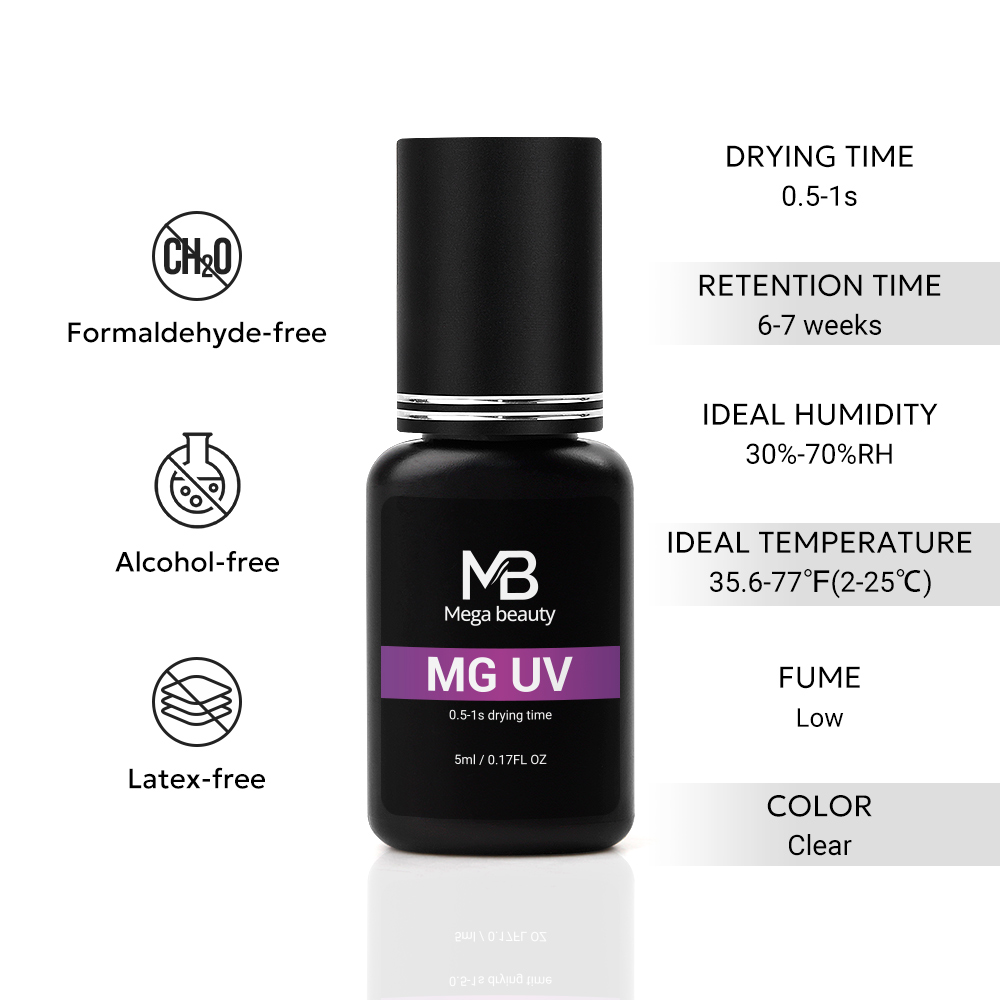
The most significant technological advancement in recent years is the UV-Curing Lash Glue. Traditional adhesives rely on ambient moisture and require up to 24–48 hours to fully dry internally. UV lash glue completely re-engineers this process:
·The Mechanism: Formulated with highly reactive photoinitiators, this adhesive remains completely liquid and workable indefinitely under standard salon lighting. The moment the lash artist activates a specialized UV/LED lamp (typically 395nm–400nm wavelength) for 1 to 3 seconds, the light instantly triggers a 100% solid polymerization.
·The Operational Value: This completely eliminates environmental temperature and humidity variables. It provides instant curing—meaning the client can wash their face or swim immediately after leaving the salon, and the lash artist experiences near-zero fumes, drastically lowering allergy risks for both parties.
The Mechanical Marvel: High-Syphon Adhesives for Volume Fans
For hand-made volume artistry, the physical flow of the glue is a make-or-break factor. Specialized High-Syphon Glues are custom-formulated for creating perfect Russian Volume or Mega Volume lash fans:
·The Mechanism: These glues feature an ultra-low surface tension that triggers a rapid capillary action (siphoning effect).
·The Operational Value: When a lash artist creates a fan and dips the root into the glue droplet, the adhesive instantly siphons upward into the base of the fan, binding the fibers into a singular, razor-sharp, needle-like base. It prevents the liquid from pooling into a heavy bulb or travelling too high up the fibers, ensuring the hand-crafted fan never collapses, pops open, or adds unnecessary weight to the natural lash.
1-5. Retention Grading Scales: Market Tiering & Longevity
In the global lash industry, adhesive longevity is universally categorized into three distinct operational retention grades based on client wear and formulation stability. To ensure global brands can seamlessly build their product lines across different market tiers, Mega Beauty provides complete manufacturing capabilities covering all three standard retention brackets:
Short-Term Retention (1 – 3 Weeks):
Commonly formulated using high-purity, long-chain alkoxy or ultra-gentle cyanoacrylate bases. This market tier is specifically tailored for the self-application retail market, temporary event/holiday styling, or high-end sensitive clients who prioritize a temporary look over a long-term attachment window.
Standard Professional Retention (4 – 6 Weeks):
The industry-standard baseline for regular commercial salons. This balanced tier utilizes standard professional-grade ethyl bases to deliver a reliable, day-to-day lifespan that aligns perfectly with a client's natural lash shedding rate and standard 3-to-4-week rebooking cycles.
Ultra-Long Longevity (6+ Weeks):
Engineered with advanced, highly refined medical-grade Ethyl cyanoacrylate. This premium market tier is designed for master lash artists who demand absolute elite holding power. The adhesive bond remains fully intact until the natural lash naturally sheds at the end of its biological growth cycle, serving as a powerful marketing tool for premium salon branding.
1-6. Pigmentations & Aromas: Aesthetic Customization
The visual and sensory profile of an adhesive determines its versatility across different lash sets and salon demographics.
The Color Palette: Tailoring Pigments to Lash Typology
·Deep Carbon Black Adhesives: Infused with carbon black pigment. The glue dries into a solid black finish. It is the gold standard for classic black extensions and dense volume sets, acting simultaneously as a subtle eyeliner effect to darken the client's lash line.
·Optically Clear Adhesives (Invisible/No Carbon Black): Completely transparent after full curing. This is an absolute necessity for Colored Eyelash Extensions, Glitter Lashes, and ultra-natural Brown/Ombre sets. By eliminating carbon black, it also removes a primary tracking allergen, making it safer for clients who are specifically allergic to black pigments.
·Vibrant Functional Colors (Blue / Pink / Caramel): These specialized pigments serve a dual purpose. For creative avant-garde or fantasy competition sets, matching blue or pink adhesives blend seamlessly with neon colored hairs. Operationally, vibrant colors give junior artists a clear visual aid to see exactly how much adhesive they have scooped up onto the extension root before it blends invisibly onto the natural lash line.
The Aroma Spectrum: Aligning Scent with Salon Tiers
The scent profile of an adhesive directly influences the consumer’s psychological perception of a salon's luxury level:
·High-Odor Formulas (Low-End / Economy Tier): Crude, unrefined industrial-grade cyanoacrylate glues. These emit sharp, pungent, chemical vapors that can easily cause throat irritation, watery eyes, and long-term occupational respiratory stress for the artist.
·Medium-Odor Formulas (Standard / Mainstream Tier): The baseline for the majority of professional salon products. The odor is present but manageable through proper salon ventilation, offering standard performance for everyday commercial use.
·Low-Odor/Fumeless Formulas (High-End / Premium Sensitive Tier): Specially synthesized formulations (such as our Alkoxy and PMMA-free lines) that undergo extensive purification to suppress volatile chemical odors, providing a highly comfortable, medical-grade service experience.
·Scent-Infused Formulas (Specialty/Fruit Aromas): For salons looking to gamify or add a sensory gimmick to their services, Mega Beauty manufactures adhesives subtly infused with light fruit extractions, such as Banana, Pineapple, or Apple. These pleasant scents effectively mask the raw underlying cyanoacrylate aroma, transforming a harsh chemical treatment into a relaxing, aromatic spa-like experience.
2. Wholesale Selection Strategies & Pain Point Solutions
Sourcing lash extension adhesives on a B2B level requires looking past generic marketing labels. A formula that thrives in a high-volume commercial salon can become an inventory liability for an international Lash Brand. To build a highly profitable supply chain, sourcing decisions must be precisely tailored to your specific business model.
2-1. For Salon Owners: Maximizing Retention, Volume Efficiency, and Freshness
For local salon owners and multi-location beauty chains, your adhesive choice directly determines your business's bottom line: rebooking rates, labor efficiency, and waste reduction.
I. The Micro-Climate Alignment
A salon's average indoor climate dictates day-to-day adhesive performance. Sourcing must begin with an honest assessment of your space's baseline temperature and relative humidity (RH) across shifting seasons. Relying heavily on heavy-duty HVAC systems or humidifiers to force a misaligned glue to work adds significant operational overhead. Salon buyers must select a base formula whose engineered optimal climate window naturally matches their region's average indoor micro-climate.
II. Synchronizing Tech Gradients, Lash Typology, and Application Mechanics
To minimize costly client complaints and retention drop-offs, a salon's glue inventory must be systematically cross-referenced against the staff's operational traits and the salon's core service menu:
·Technician Skill Level: Inventory must cater to the team's internal technical gradient—stocking 3s–5s slow-curing formulas for junior stylists/training, 1s–2s standard profiles for intermediate pros, and 0.5s–1s ultra-fast glues exclusively for elite master artists.
·Lash Typology Compatibility: Instead of using a one-size-fits-all glue, salon buyers must categorize inventory based on the extension architecture discussed in Section 1-3. This means pairing low-viscosity formulas with Classic/Camellia sets to ensure clean, clump-free roots, while reserving medium-to-high viscosity adhesives for the flat, wide bases of YY and W-Lashes to secure maximum wrapping attachment.
·Application Mechanics: The inventory must align with the physical placement habits of the team, matching the chemical grab-time to whether the stylists predominantly utilize a direct dipping (Dip) technique or a sliding (Slide) attachment method down the natural hair shaft.
III. The Bottling Math: Freshness vs. Cost Efficiency (5ml vs. 10ml vs. 15ml)
Choosing bottle volume is a strategic balance between minimizing product waste and maximizing physical active performance:
5ml (The Freshness Standard): Ideal for low-to-medium volume boutique studios or solo lash artists. Because cyanoacrylate degrades rapidly once unsealed, a 5ml bottle ensures the liquid is entirely used up within its 4-to-6-week optimal chemical activity window. This eliminates the risk of using "tired," partially cured glue from a dying bottle, which is the primary cause of sudden, unexpected client retention failure.
10ml / 15ml (The High-Turnover Volume Choice): Tailored exclusively for high-traffic, fast-turning commercial salons with multi-bed capacities. When a salon is constantly rotating clients, these larger volumes significantly lower individual packaging costs and boost margin per service, provided the bottle is exhausted before the 4-week threshold.
IV. Client Wellness & Artist Longevity
Salons must balance structural performance with sensory comfort. High-performance glues shouldn't cause a wave of sensitive client reactions 24 hours later. Sourcing ultra-purified formulas significantly lowers eye-stinging vapor rebound, protecting clients with sensitive skin while shielding lash artists from daily respiratory fatigue during long operational hours.
2-2. For Brand Wholesalers & Distributors: Balancing Performance, Logistics, and Portfolio Architecture
For international brand owners, private label buyers, and bulk distributors, sourcing decisions require a macro-level business approach. While you must absolutely guarantee top-tier on-bed performance—ensuring the adhesive's curing speed, viscosity, and retention longevity perfectly satisfy professional lash artists—your operational pain points expand far beyond the salon. To safeguard your investment and build market share, you must simultaneously balance premium product performance with warehouse shelf-life, transit logistics stability, international compliance, and strategic product line scalability.
I. Sourcing for the Market's "Greatest Common Denominator"
When wholesaling across massive geographic regions (such as distributing across multiple states or European countries), you cannot predict or control every individual salon's exact micro-climate. To mitigate the risk of mass performance failure and stock stagnation, distributors generally opt for one of two strategic sourcing pathways depending on their market distribution density:
·Strategy A: Target Climate Customization: Wholesalers analyze the specific geographic baseline of their core target country or state, selecting a dedicated adhesive formulation whose engineered optimal window perfectly snaps onto that region's annual average climate. For example, sourcing a specialized dry-climate formula exclusively for the Middle East or inland Nordic winter markets.
·Strategy B: Broad-Threshold Versatility: For distributors managing multi-region fulfillment warehouses, the optimal solution is to source a highly forgiving, wide-threshold formula—such as an All-Weather Adhesive that operates stably across a massive 25% to 75% RH spectrum. This universal adaptation maximizes customer compatibility right out of the box, drastically reducing regional product returns and customer service overhead.
II. Global Regulatory and Chemical Compliance
Navigating cross-border regulatory frameworks is a standard operational step to protect your capital and ensure smooth distribution. Sourcing from a factory that provides transparent chemical documentation ensures your inventory moves through global check-points without administrative delays.
III. Sourcing Timelines: Preserving Shelf Life Against Transit Lag
Because lash adhesives are volatile liquids reactive to ambient conditions, they begin aging immediately after bottling. Wholesalers must calculate transit times against inventory turnover:
·The Shelf-Life Buffer: Reliable manufacturing must guarantee an unopened shelf life of 6 to 8 months under cool storage, leaving an ample time cushion for international freight, customs clearance, warehouse sorting, and localized distribution.
·Thermal Shock Protection: To combat extreme cargo heat spikes inside ocean containers or air cargo holds, bulk shipments require insulated climate packaging (such as thermal vacuum foil bags paired with industrial desiccants) to preserve the chemical inhibitors before arrival.
IV. Building a Strategic Product Portfolio Architecture
Distributors rarely scale by offering a single, isolated adhesive. To capture a diverse B2B market and maximize customer lifetime value, the strategic approach is to establish a balanced, tiered product matrix rather than relying on a standalone item. Your product line architecture should think in terms of functional combinations:
·The Core Volume Driver: A highly versatile, professional-grade standard adhesive that satisfies the daily operational environment of the mainstream commercial salon market. This acts as your brand's cash-flow foundation.
·The High-Tier Speed Extension: A specialized, low-viscosity instant-cure formula designed to capture elite competition artists and master technicians who demand peak mechanical speed.
·The Specialty/Differentiating Line: Niche alternatives—such as optically clear pigments, ultra-low-allergy bases, or next-generation UV LED Curing Adhesives—engineered to capture specific premium markets, handle hyper-sensitive clientele, and distinguish your brand from generic competitors.
V. OEM/ODM Customization Flexibility & Batch Consistency
A vital element for private label buyers is partnering with a factory that offers scalable MOQ (Minimum Order Quantities) on custom component packaging—such as printed bottles, customized outer boxes, anti-blocking pins, and bespoke private labeling. More importantly, the manufacturer must guarantee absolute batch-to-batch consistency; the chemical properties, viscosity, and curing speed of Batch 100 must perfectly replicate Batch 1.
Conclusion
Achieving flawless eyelash extension retention comes down to one core reality: matching the correct chemical properties of your adhesive with the precise physical architecture of your lash inventory. As a leading wholesale factory with over a decade of manufacturing expertise, Mega Beauty provides absolute batch-to-batch consistency across all performance tiers. Wholesalers and brand owners can easily review our full inventory on our Lash Extension Glue Category Page or build a fully tailored, globally compliant product line through our Custom OEM & Private Label Page. Contact the Mega Beauty technical sales team today to secure certified product samples tailored perfectly to your target market.
[1] European Parliament and Council. (2009). Regulation (EC) No 1223/2009 on Cosmetic Products. Official Journal of the European Union, Annex II (Prohibited Substances).
[2] U.S. Food and Drug Administration. (2024). Methyl Methacrylate (MMA) and Hydroquinone Hazards in Professional Professional Cosmetics. FDA Consumer Safety Updates.
[3] American Chemical Society. (n.d.). Cyanoacrylates and Mechanisms of Anionic Polymerization in Environmental Moisture. ACS Chemical Registry.
[4] International standard guidelines on cosmetic volatile organic compounds (VOCs) and material shear strength testing under varying relative humidity thresholds.
No.18 B, Laoshan Road, Laoshan District, Qingdao City,Shandong Province
Copyright © 2025 Qingdao Mega Beauty Lashes Co., Ltd. All Rights Reserved.
