Building your own lash extension brand involves more than adding a logo to existing products. From defining your target customers and selecting the right product range to developing custom specifications, designing packaging, and arranging bulk production, each decision shapes your brand's identity, product quality, and long-term competitiveness.
Private label lash extensions allow beauty entrepreneurs, professional lash artists, salon owners, and distributors to sell lash extension products under their own brand names without establishing their own manufacturing facilities. By working with an experienced lash extension manufacturer, businesses can develop a branded product line based on their market positioning, professional application requirements, and budget.
This guide walks you through the complete process of starting a private label lash extension brand, including product planning, manufacturer selection, customization, sampling, packaging development, and wholesale production.
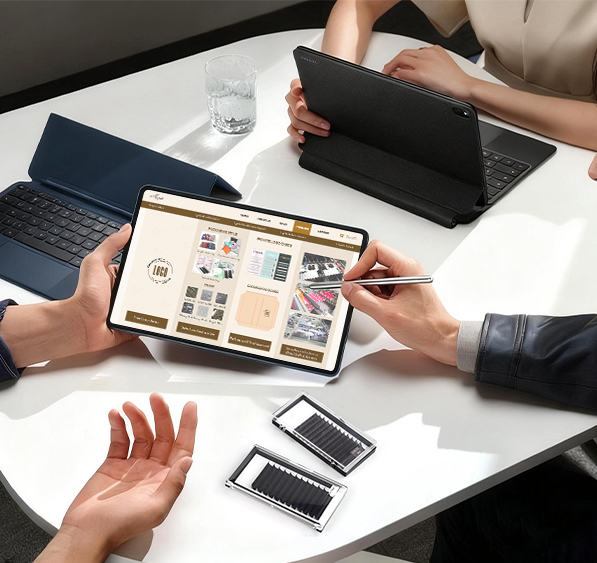
Private label lash extensions are professional eyelash extension products manufactured by a third-party supplier and sold under another company's brand name. These products can include classic and volume lash extensions, flat lashes, easy fan lashes, premade fans, and specialty designs such as YY, W, and U lashes.
Private labeling can be as simple as selecting existing lash products and adding custom logos, labels, and packaging. Brands seeking greater differentiation can also work with manufacturers to adjust available product specifications, fiber finishes, lash structures, and tray configurations to suit their customers' preferences.
The level of customization depends on the manufacturer's existing product range, available production options, and the requirements of each project. For new brands, starting with established product designs and carefully selected customization options can help manage initial investment while creating a recognizable product identity.
Launching a private label lash extension brand requires a clear development process. Rather than selecting products and packaging independently, successful product planning connects brand positioning, professional application requirements, manufacturing capabilities, and purchasing decisions.
The following eight steps provide a practical framework for developing a branded lash extension collection.
Before developing your private label lash extensions, you need to determine where your brand will compete in the market and who your products are intended for. These decisions directly influence your lash fiber selection, product specifications, packaging design, manufacturing costs, and retail pricing.
Define Your Brand's Price Positioning
A premium lash extension brand may prioritize refined PBT fiber textures, consistent curl quality, specialized lash structures, and distinctive packaging. Premium presentation, such as custom magnetic boxes or carefully designed branded trays, can support a higher-end brand image, but these choices also increase the initial packaging investment.
A mid-range professional brand may focus on balancing product quality, practical packaging, and competitive pricing. Standard lash trays with customized insert cards and branded labels can create a consistent visual identity without requiring expensive packaging structures.
For budget-oriented or high-volume wholesale brands, controlling unit costs and maintaining reliable product consistency are especially important. Selecting established lash designs, commonly purchased specifications, and standardized packaging can help simplify production and improve cost efficiency. However, lower pricing should not come at the expense of essential product quality.
Understand Your Target Customers' Lash Extension Preferences
Your target customers also determine which lash extension specifications deserve priority.
For example, brands supplying salons that primarily offer classic lash applications may need a stronger selection of classic lash diameters and commonly requested curls. Brands serving volume lash artists may prioritize finer diameters, suitable lash tape configurations, and consistent fiber handling for fan creation.
Customer preferences also influence lash lengths, curl types, and colors. Some markets may show stronger demand for natural-looking brown extensions and softer curls, while others may favor more dramatic curls, longer lengths, or specialty lash designs. These preferences should be verified through local customer feedback, salon purchasing patterns, and market research rather than assumed from geographic location alone.
Your customers' purchasing habits are equally important. Salons with established styling services may prefer single-length trays for frequently used specifications, while brands targeting smaller professional buyers may consider mixed-length trays to offer more flexibility within a limited initial assortment.
Connect Your Brand Positioning with Product Costs
Brand positioning and target customers should ultimately translate into a practical product development budget. Fiber selection, lash structure, tray configuration, packaging materials, and the number of SKUs all affect purchasing costs and inventory requirements.
A premium brand does not necessarily need expensive packaging for every product, just as a competitively priced brand should not automatically choose the cheapest available materials. The goal is to allocate your budget to the product characteristics and presentation details that matter most to your intended customers.
Establishing these priorities before approaching a manufacturer makes it easier to compare customization options, request relevant samples, and develop a product collection that supports your brand's pricing strategy.
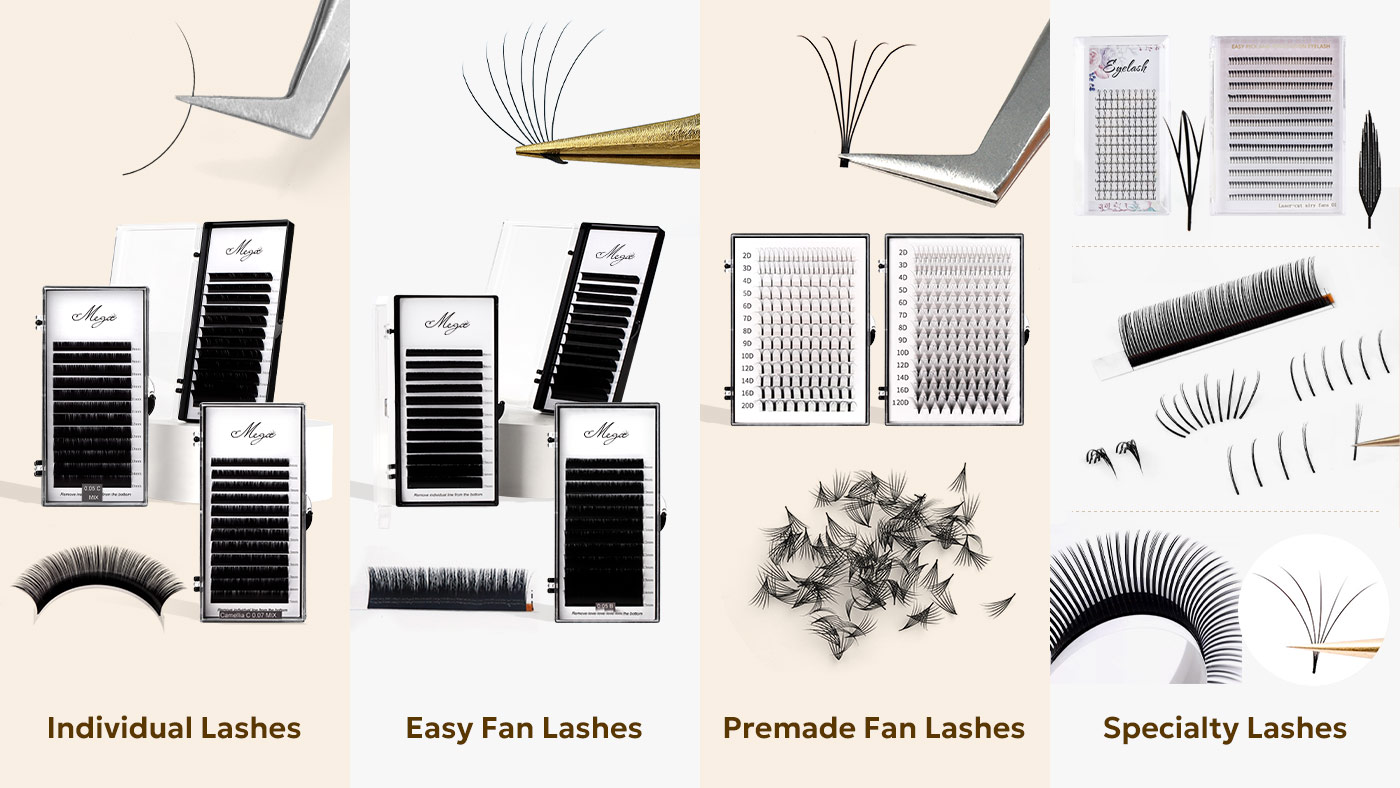
Once your brand positioning is clear, the next step is to determine which lash extension products should form your collection. Your product range should reflect both customer demand and your brand's current stage of development.
For New Lash Extension Brands
New brands generally benefit from starting with a focused range of established professional lash extension products rather than launching too many categories simultaneously.
Classic and volume lash extensions are practical starting points because they serve fundamental professional application needs. Premade lash fans can also be a suitable core product category, particularly for brands targeting customers who prefer ready-made fan configurations.
Instead of offering every available curl, diameter, and length immediately, new brands can select a manageable assortment of commonly requested specifications based on their target market. This approach helps control initial inventory investment, simplify product management, and identify which products generate repeat purchases.
For Established Lash Extension Brands
Established brands with an existing customer base can use product line expansion to reach additional market segments and differentiate themselves from competitors.
Beyond their core classic and volume collections, brands may introduce flat lashes, easy fan lashes, or specialized premade fan configurations. Specialty structures such as YY, W, and U lashes can provide additional styling options and create opportunities for new product collections.
Colored lashes, brown lash extensions, camellia designs, and other specialized products may also be considered when supported by customer demand.
For mature brands, product expansion should focus on filling identifiable gaps in the existing collection rather than simply increasing the number of SKUs. Customer feedback, repeat-order data, and emerging professional application preferences can help determine which new products deserve investment.
Build a Product Range That Can Grow with Your Brand
Whether you are launching your first collection or expanding an established product line, consider how different products fit together in terms of pricing, specifications, packaging, and future replenishment.
A clear product structure allows you to maintain consistency across your collection while introducing new lash extension series as demand develops.
Mega Beauty offers a broad selection of wholesale lash extensions, including classic, volume, flat, easy fan, premade fans, and specialty lash structures, allowing brands to select products according to their development stage and target market.
Choosing a suitable manufacturing partner is one of the most important decisions in developing a private label lash extension brand.
A reliable manufacturer should offer more than a product catalog. The supplier should be able to explain available customization options, clarify production limitations, provide representative samples, and communicate the requirements for bulk orders.
When evaluating private label lash extension manufacturers, pay attention to the following factors:
Product range: Does the manufacturer offer the lash extension categories your brand needs?
Customization capabilities: Can you adjust specifications, available lash structures, tray configurations, and branded packaging?
Quality consistency: How does the supplier control curl, fiber appearance, lash arrangement, and product consistency between production batches?
MOQ flexibility: Are minimum order quantities suitable for your initial product range and purchasing budget?
Sampling process: Can you evaluate samples before confirming production?
Communication and replenishment: Can the supplier provide clear production information and support future repeat orders?
For brands sourcing several professional lash extension categories, working with a manufacturer that supplies multiple compatible product lines may simplify communication, product development, and purchasing coordination.
Mega Beauty manufactures a broad range of professional lash extension products and offers OEM/ODM and private label services, allowing brands to develop different lash collections through a coordinated sourcing process.
Before selecting a supplier, request product samples and clarify which specifications are standard options and which require additional customization. You can also explore our guide to eyelash extension manufacturers for additional considerations when comparing potential suppliers.

After selecting a manufacturing partner, the next step is to translate your product concept into specifications that can be consistently produced.
Customization should not simply mean choosing as many options as possible. Each decision should support a clear product purpose, professional application requirement, or brand positioning.

Lash Fiber Materials and Finishes
The choice of lash fiber affects the appearance, texture, and overall positioning of a lash extension collection.
Professional lash extensions commonly use PBT-based synthetic fibers, with different processing methods and fiber structures creating silk-effect, faux mink, cashmere-effect, and flat lash products.
Brands should consider whether their customers prefer a deep matte finish, a softer visual appearance, a particular fiber texture, or a specific color range. These characteristics help distinguish products within a collection and should remain consistent across repeat orders.
Curl, Length, and Diameter Specifications
Curl, length, and diameter are fundamental specifications for professional lash extensions, but the most extensive range is not necessarily the most commercially practical.
Brands should select specifications based on their customers' application techniques, purchasing preferences, and expected demand.
For example, offering too many combinations at launch can increase inventory requirements and make it difficult to identify best-selling products. A focused range of popular specifications can provide a more manageable starting point, with additional options introduced as customer demand becomes clearer.
For consistency, brands should also establish clear product specifications and reference samples that can be used when evaluating subsequent production batches.
Lash Structure and Fan Design
For premade fans and specialty lash extensions, product structure deserves particular attention.
Different premade fan configurations can vary in fan width, density, stem length, and base design. YY, W, and U lash products also feature distinct branching structures that influence their visual appearance and professional application characteristics.
When selecting these products, brands should evaluate whether the available structures match their target customers' preferred lash effects and working techniques.
Rather than introducing several similar designs immediately, consider sampling a smaller selection to identify which structures offer meaningful differences for your customers.
Lash Tape and Tray Configuration
Lash tape and tray design can influence the daily working experience of professional lash artists.
Tape adhesive strength affects how lash strips are handled and how easily fibers can be removed during application. Different lash products and professional working preferences may require different tape configurations.
Tray layout is another important consideration. Single-length trays allow customers to purchase specific specifications, while mixed-length trays provide several lengths within one package.
Brands should also consider the number of rows, lash strip arrangement, tray labeling, and the clarity of product information.
Before confirming a design, request samples with the intended tape and tray configuration so that lash artists can evaluate the actual working experience.
Once the product specifications are established, packaging development can begin.

Private label lash extension packaging should do more than display a logo. It should communicate the brand's positioning, protect and organize the products, and provide the information customers need to identify the correct lash specifications.
For professional lash extension brands, consistent labeling is particularly important because customers often purchase multiple combinations of curl, length, diameter, and product type.
Common packaging customization options include branded lash boxes, custom logos, labels, insert cards, tray designs, and different box materials or structures.
A salon-focused brand may prefer practical packaging that allows lash artists to identify specifications quickly, while a premium retail-oriented collection may use more distinctive colors, finishes, and presentation styles.
Mega Beauty provides private label packaging customization and design support, including logo and packaging design services. Brands can develop packaging that coordinates with their selected lash extension products and overall visual identity.
When planning packaging, consider production cost, storage efficiency, product labeling, and whether the same packaging system can accommodate future product additions.
A consistent packaging format across multiple lash extension series can make the collection easier to recognize and manage.
Sampling is an essential stage before committing to a wholesale lash extension order.
Product photographs and specification sheets provide useful information, but physical samples allow brands to evaluate how the products look, feel, and perform under professional working conditions.
For traditional lash extensions, examine fiber appearance, curl consistency, strip arrangement, tape behavior, and the ease of lash pickup.
For premade fans and specialty lash structures, additional considerations may include fan symmetry, base consistency, branching appearance, and handling during professional application.
Packaging samples should also be reviewed to confirm logo placement, printed colors, labeling accuracy, and the fit between the lash tray and outer box.
Where possible, ask experienced lash artists from your target customer group to test representative products and provide structured feedback.
Rather than relying on general impressions, record specific observations about product handling, appearance, and consistency. This feedback can help identify which available specifications should be adjusted before production.
Once a suitable configuration has been approved, retain a reference sample and documented specifications for comparison with future orders.
After approving the products and packaging, the next stage is to confirm the commercial details of the order.
Minimum order quantities for private label lash extensions may vary depending on product category, specification combinations, packaging requirements, and customization complexity.
For this reason, brands should request a quotation based on their actual product plan rather than assuming that one MOQ applies to every lash extension product.
When reviewing a quotation, consider the complete purchasing cost, including products, custom packaging, sampling, shipping, and any applicable development or setup charges.
It is also important to confirm how orders will be divided across different SKUs. A low total MOQ may be less useful if the required quantity for each individual specification exceeds your expected demand.
Before bulk production begins, confirm the approved specifications, packaging artwork, quantities, quality requirements, payment terms, and production schedule in writing.
Mega Beauty offers factory-direct wholesale and private label manufacturing services, with order requirements and production arrangements discussed according to the selected products and customization needs.
Clear documentation at this stage helps reduce misunderstandings and provides a consistent reference for order inspection and future replenishment.
Completing production is not the final stage of building a private label lash extension brand.
Before launching, prepare accurate product descriptions, specification charts, packaging information, product photographs, and ordering materials for your intended sales channels.
For brands selling to professional lash artists, clear specification information is especially important. Customers should be able to distinguish product types, curls, lengths, diameters, and tray configurations without confusion.
After launch, monitor which products generate repeat purchases, which specifications move slowly, and what feedback customers provide about product handling and consistency.
This information can guide future purchasing decisions and help determine whether to expand the collection.
Brands may also consider complementary professional products, such as lash adhesives, preparation products, aftercare supplies, and application accessories, once their core lash extension range is established.
For repeat orders, maintain consistent product specifications and communicate any requested changes clearly to the manufacturer. Consistency between batches is particularly important for professional customers who rely on familiar product characteristics in their daily work.
Developing a private label lash extension brand involves balancing product differentiation with practical purchasing and inventory decisions. Several common mistakes can make the process more complicated than necessary.
An extensive product range may appear attractive, but introducing too many categories and specification combinations can increase inventory pressure before demand has been established.
Start with a focused collection that serves a clearly defined customer group, then expand based on actual purchasing patterns and feedback.
A lower unit price does not necessarily represent better value if products have inconsistent curls, difficult-to-handle tape, irregular fan structures, or unsuitable packaging.
Evaluate samples and compare suppliers based on product suitability, quality consistency, customization support, and total purchasing cost.
Lash extension products are used by trained professionals with established working preferences.
A product that looks attractive in photographs may not provide the handling characteristics expected by your customers. Involving professional lash artists in sample evaluation can help identify potential issues before launch.
Without documented specifications and approved samples, repeat orders may be difficult to evaluate consistently.
Maintain clear records of fiber type, curl, length, diameter, lash structure, tape configuration, tray layout, and packaging requirements for every approved SKU.
Packaging dimensions, tray layouts, and labeling requirements depend on the products being sold.
Finalizing packaging before confirming the product configuration can create unnecessary redesign work or additional costs. Product specifications and packaging development should therefore be coordinated.
Yes. Private label manufacturing allows businesses to sell professional lash extension products under their own brand without operating a production facility. A manufacturing partner produces the products according to agreed specifications and branding requirements, while the brand manages its sales, marketing, and customer relationships.
Private labeling generally involves selecting existing products and selling them under your own brand with customized logos, labels, or packaging. Custom OEM projects may involve additional changes to available product specifications, fiber finishes, structural options, or tray configurations. The exact scope depends on the manufacturer's capabilities and the project requirements.
Yes. Premade fans and specialty lash extensions such as YY, W, and U lashes can be included in a private label professional lash extension collection. Available customization options may include product specifications, selected structural configurations, tray layouts, and branded packaging, depending on the product series.
MOQ depends on the selected lash extension products, the number of specifications, packaging requirements, and customization complexity. Brands should provide their intended product assortment and packaging requirements to obtain an accurate minimum order quantity and quotation.
Not necessarily. Some manufacturers offer branding and packaging design support for businesses that do not have completed artwork. Mega Beauty provides logo and packaging design assistance, helping brands develop a coordinated presentation for their professional lash extension collections.
Development time depends on whether the brand selects existing products or requires additional specification adjustments, sampling, and custom packaging. Production schedules also vary with order quantities and manufacturing arrangements. Confirm the expected timeline with your supplier after the product requirements have been established.
You should request samples before confirming bulk production, particularly when evaluating unfamiliar lash fibers, specialty structures, tape configurations, or custom packaging. Sample availability, costs, and preparation arrangements should be confirmed with the manufacturer.
Mega Beauty provides factory-direct OEM/ODM and private label services for professional lash extension brands. Based on our existing product collections, brands can customize lash fiber options, product specifications, selected lash structures, tape adhesive strength, tray configurations, and branded packaging.
The following questions explain the customization options available for developing your private label lash extension collection.
Mega Beauty offers professional lash extensions manufactured from PBT-based synthetic fibers, with different fiber structures, surface finishes, and textures to support a variety of product styles.
Available options include silk-effect, faux mink, cashmere-effect, and flat lash extensions. These product names generally describe differences in fiber appearance, processing, or structure rather than entirely different raw materials.
Brands can select from available fiber options to develop collections with different levels of softness, surface sheen, and visual definition. The specific material and finish options depend on the selected lash extension series.
Yes. Mega Beauty offers different lash lengths, diameters, and curl types across its professional lash extension collections.
Available length options generally cover 5–20 mm, while diameter options commonly range from 0.03–0.20 mm, depending on the product series. Brands can select specifications appropriate for classic, volume, or specialty lash extension products.
Curl options across our product range include J, B, C, CC, D, DD, L, LC, LD, M, and other specialized curls. Not every curl, diameter, or length combination is available for every product.
Brands can also choose single-length or mixed-length tray arrangements to suit their product positioning and customer purchasing preferences.
Yes. In addition to standard black lash extensions, Mega Beauty offers brown and colored lash extension options.
Available colors include different brown tones and selected fashion colors, allowing brands to develop natural-looking collections or more distinctive specialty product lines.
Color availability, fiber finish, and compatible specifications vary by product series. Brands can discuss their preferred colors and request available samples before confirming an order.
Mega Beauty offers different lash tape configurations to accommodate professional working preferences and lash extension application techniques.
Available options include high-tack, low-tack, ultra-low-tack, and non-adhesive tape configurations.
Tape adhesive strength affects how lash fibers are picked up and separated from the strip. For volume lash extensions, it can also influence fan-making techniques and how the lash bases behave during pickup.
Brands can select available tape options according to the intended product type and request samples to evaluate their suitability for professional use.
Yes. Mega Beauty offers different structural options within its existing premade fan and specialty lash extension collections.
For premade fans, available selections include different fan dimensions, long-stem and short-stem designs, narrow fans, pointed-base configurations, and other existing fan styles.
For specialty lash extensions, brands can choose from available YY, W, U, and related structural designs, with specification and tray options depending on the selected series.
These customization services are based on Mega Beauty's established product structures and available manufacturing options. Brands can discuss the appropriate designs and configurations for their target customers.
Mega Beauty offers different lash tray arrangements to accommodate product specifications, professional usage preferences, and packaging requirements.
Common configurations include 12-row and 16-row trays, with additional row arrangements and double-row (XL) formats available for selected products.
Brands can choose single-length or mixed-length trays and coordinate the tray layout with their intended lash extension specifications.
Custom tray cards, specification labels, and branded inserts can also be incorporated into the packaging design.
Yes. Mega Beauty provides private label packaging customization, including logo design assistance, branded tray cards, product labels, and outer packaging.
Brands can choose cost-effective standard plastic boxes with customized insert cards or explore more distinctive packaging options, such as magnetic boxes, depending on their brand positioning and budget.
Packaging artwork, colors, logos, labeling, and available decorative finishes can be coordinated to create a consistent appearance across different lash extension series.
Mega Beauty also offers design support for brands that are developing their visual identity or do not yet have finalized packaging artwork.
Yes. Brands can develop a coordinated product collection using different professional lash extension categories, including classic, volume, flat, easy fan, premade fans, and specialty YY, W, and U lash products.
Mega Beauty can help brands select from its existing product range and coordinate available product specifications, tray layouts, and branded packaging across multiple series.
MOQ, customization availability, and production arrangements are confirmed according to the products and packaging requirements included in each project.
Building a successful private label lash extension collection starts with understanding your customers, choosing the right products, and working with a manufacturer that can support consistent specifications and reliable supply.
As a professional lash extension manufacturer in China, Mega Beauty provides factory-direct wholesale, OEM/ODM, and private label solutions covering classic and volume lashes, flat lashes, easy fan lashes, premade fans, and specialty YY, W, and U lash products.
From selecting available fiber and structural options to customizing lash trays, labels, and packaging, we help brands develop professional lash extension collections aligned with their market positioning and purchasing requirements.
Explore our private label lash manufacturing services to discuss your product ideas, customization requirements, and wholesale purchasing plans.
Laoshan Road, Laoshan District, Qingdao City,Shandong Province
Copyright © 2025 Qingdao Mega Beauty Lashes Co., Ltd. All Rights Reserved.
